
Cherry Laurel: The Invasive Species Still Being Sold

Our countryside is struggling. Successive heatwaves, droughts, floods, fires and storms. Heating and cooling throwing off aeons-old natural rhythms. Fragmented and failing habitats, ecosystems out of balance, pollution, disturbance and intentional harm. Into this comes a further threat - invasive species. As native species struggle to adapt to a world changing at an ever-faster pace, invasive species that are more resilient, more adaptable, and with a host of tactics to outcompete other species, can reach into the cracks that humans have created, and fill them.
Sometimes these species arrive by accident, such as Dutch Elm Disease. It reached our shores in shipments of timber, and has since permanently changed our countryside, the familiar silhouettes of Elm now forgotten. Some, however, are brought in deliberately, often for ornamental value, or as favourites of Victorian hunters. One of these is Cherry Laurel.
What is Cherry Laurel?
Cherry Laurel was first planted in the UK in the early 17th century, brought over from Balkan southeast Europe, and western Asia. It was mainly planted for hedging and game cover - yet another plant like rhododendron that we have Victorian hunting enthusiasts to thank for. It was first recorded growing wild in Britain in 1886, and has only grown stronger in the past 140 years.
Cherry Laurel forms dense stands, shading out competition, and produces a lot of fruit, which is then widely distributed by birds. It also spreads by layering from an existing stand, slowly spreading outwards, creating more and more thickets. This double approach to spreading ensures quick and successful colonisation of new areas.
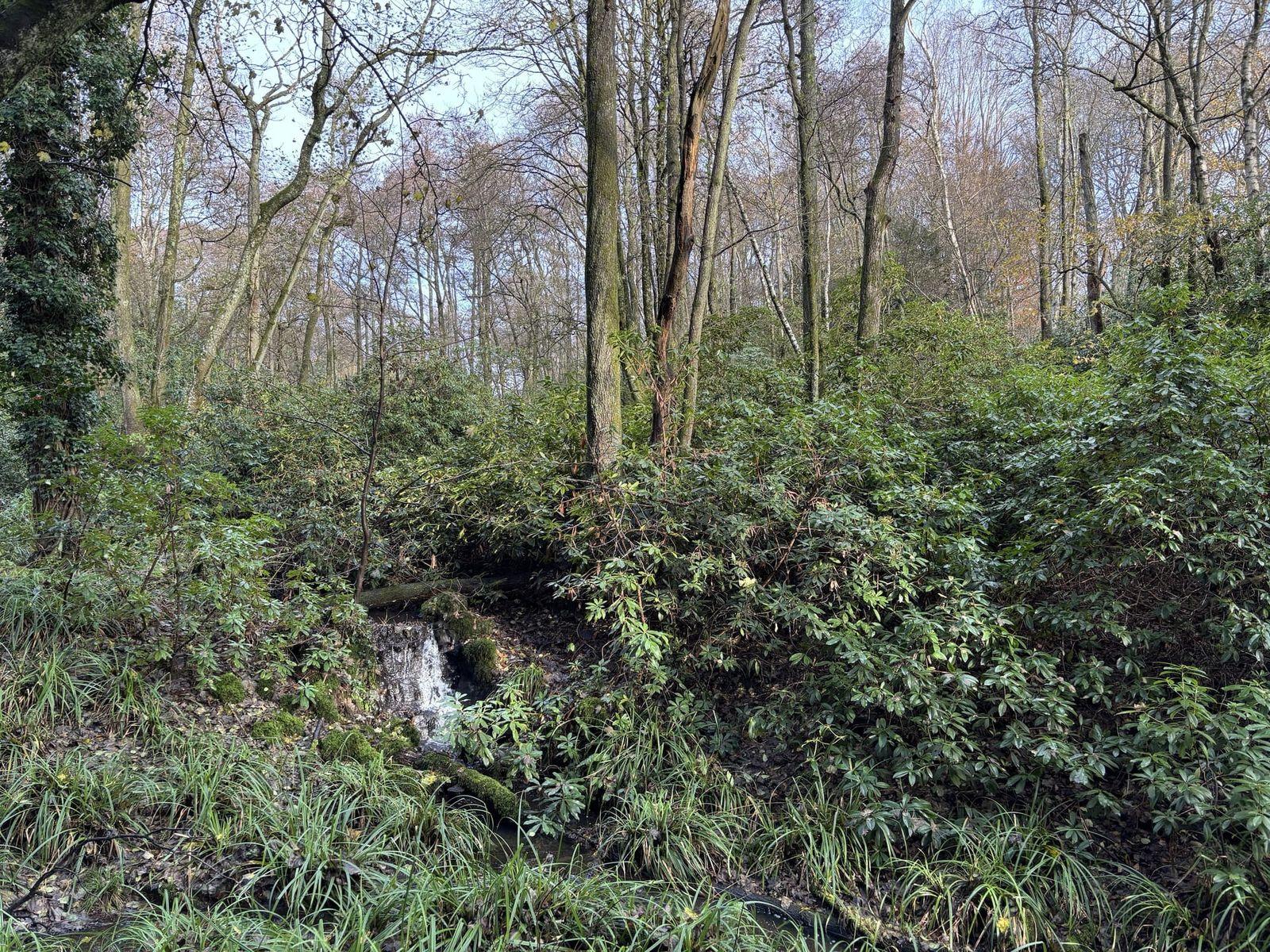
Data from 2010 shows that it was present in 1,882 of 10km squares across the country, and it has likely spread much further by now, especially since beside spreading of its abundant fruit, it also expands by layering, expanding existing patches. Unfortunately, despite the damage that’s been done and the economic cost of trying to stop its spread, Cherry Laurel is still easily available and commonly used as a hedging plant, as it grows quickly and thickly. Many people still cultivate it in their garden as an ornamental, with glossy dark green leaves and sprays of white flowers.
What is the damage caused?
Cherry Laurel is shade tolerant, so it can easily take root in our woodlands. It then creates a dense shade and releases cyanide, which prevents other species from growing, limits biodiversity and harms the soil-biome. This same mechanism makes it unpalatable to herbivores, meaning that it isn’t kept in check by browsing - even the huge amount of deer we have in the UK won’t make an impact on it. It is highly tolerant to low water availability, meaning it is able to grow in harsh environments and spread further, and it creates acidic leaf litter, which harms the soil and watercourses, as runoff brings the acidification into streams and rivers.
All of this places a huge economic burden on the country. In a recent report from CABI, it was estimated that invasive species cost the UK economy £4 billion a year. With the continued sale and planting of Cherry Laurel, we all bear the financial burden of individuals’ decisions to bring in non-native species. Aside from the economic aspects, the European Commission has declared that invasive species are one of the five main causes of biodiversity loss - something that is now happening quicker than the extinction that wiped out the dinosaurs.
What can we do?
Currently, Cherry Laurel is not on the government list of restricted invasive species. We call for Cherry Laurel to be added to this list, which would prohibit the importation, keeping, growing, transportation or selling of it - just as the Gaelic Woodland Project is calling for in Ireland. This would be a first major step to ensure that the problem is not exacerbated by new, intentional planting.
There needs to be resources made available to educate people on the danger of invasive species, working particularly with horticultural organisations to convince people to remove and destroy invasive species from their gardens, replacing them with beneficial, native species.
Removal can also be a positive. As it is designated as a shrub, not a tree, there is no license needed for felling. The thick trunks can be turned into sustainable firewood (with careful seasoning to ensure the cyanide has been neutralised), or biochar. The other option is to stem bore the Cherry Laurel, if time and resources are low. It’s not ideal in that it uses herbicide, but as it is applied directly to the stem itself, there is little risk to surrounding vegetation. They gradually collapse, opening up the canopy, allowing light and life to return to choked woodlands.
Protect Earth has already tackled a lot of Cherry Laurel at its sites, requiring a lot of time, energy and resources from the team and volunteers that have stepped up. At Thorncombe Street, we were brought on board to help plant several shelterbelts, as well as the beginnings of a brand new ancient forest. But first, all the Cherry Laurel had to be taken out. The dedicated landowners spent many sweaty hours and days clearing the land, so it was ready to plant local trees, and bring diversity back to Thorncombe Street.
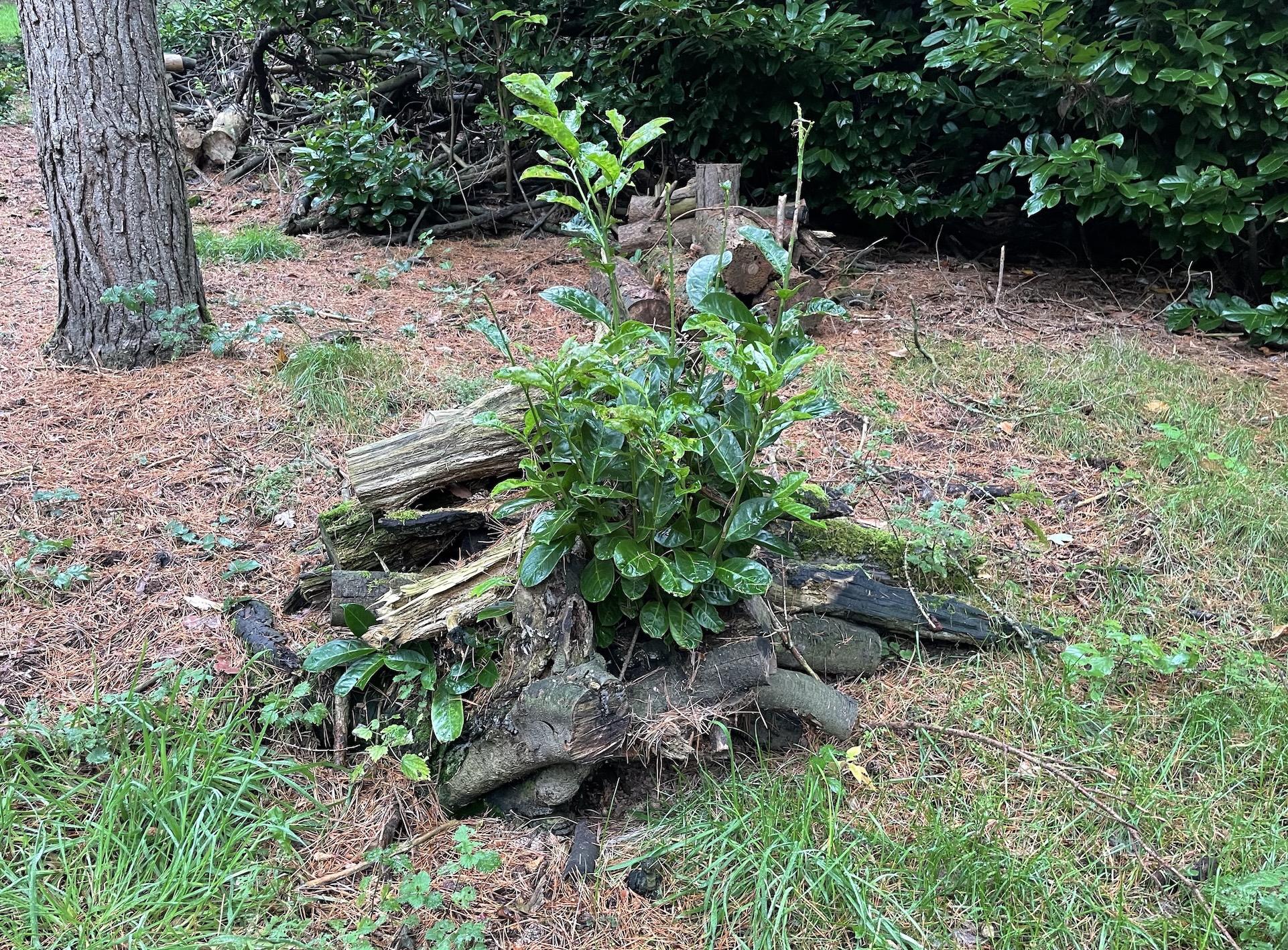
We are also beginning a trial in Newbury to turn the Cherry Laurel and Rhododendron onsite into biochar. Using biochar on the site would speed up regeneration of the conifer soils, locking carbon in and bringing fresh life to the site.
Support us
By seeing the removal of Cherry Laurel as an opportunity, we can make a positive change in our ailing countryside. Cherry Laurel can be a resource - to heat homes, and to remediate badly depleted soils. But all of this takes time, and money. You can support us in this work!
You can sponsor a square of ancient woodland restoration which benefits the protection and restoration of ancient woodlands, a carbon rich habitat and precious woodland ecosystem here in the UK. A lot of the restoration work we do involves the removal of invasive species like Cherry Laurel, allowing life to breathe in our ancient woodlands. You can also volunteer with us, and get stuck in yourself!
Every little helps - every pound donated, every day spent volunteering, it all makes a difference, it all helps bring life back to our isles.