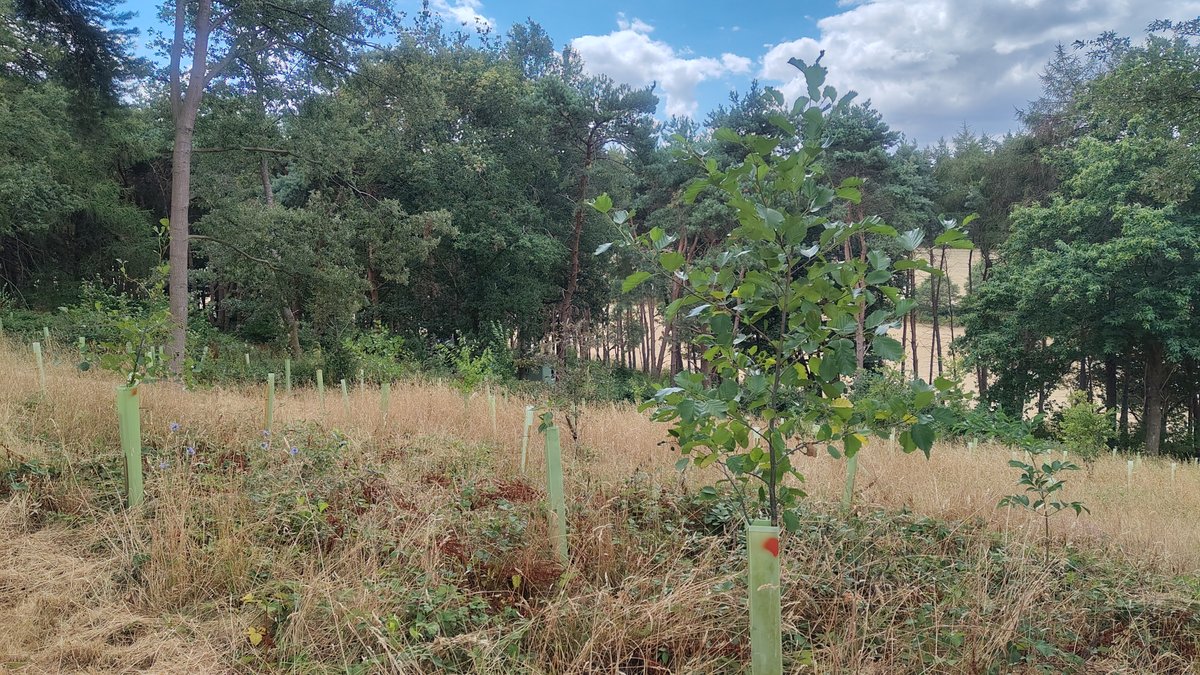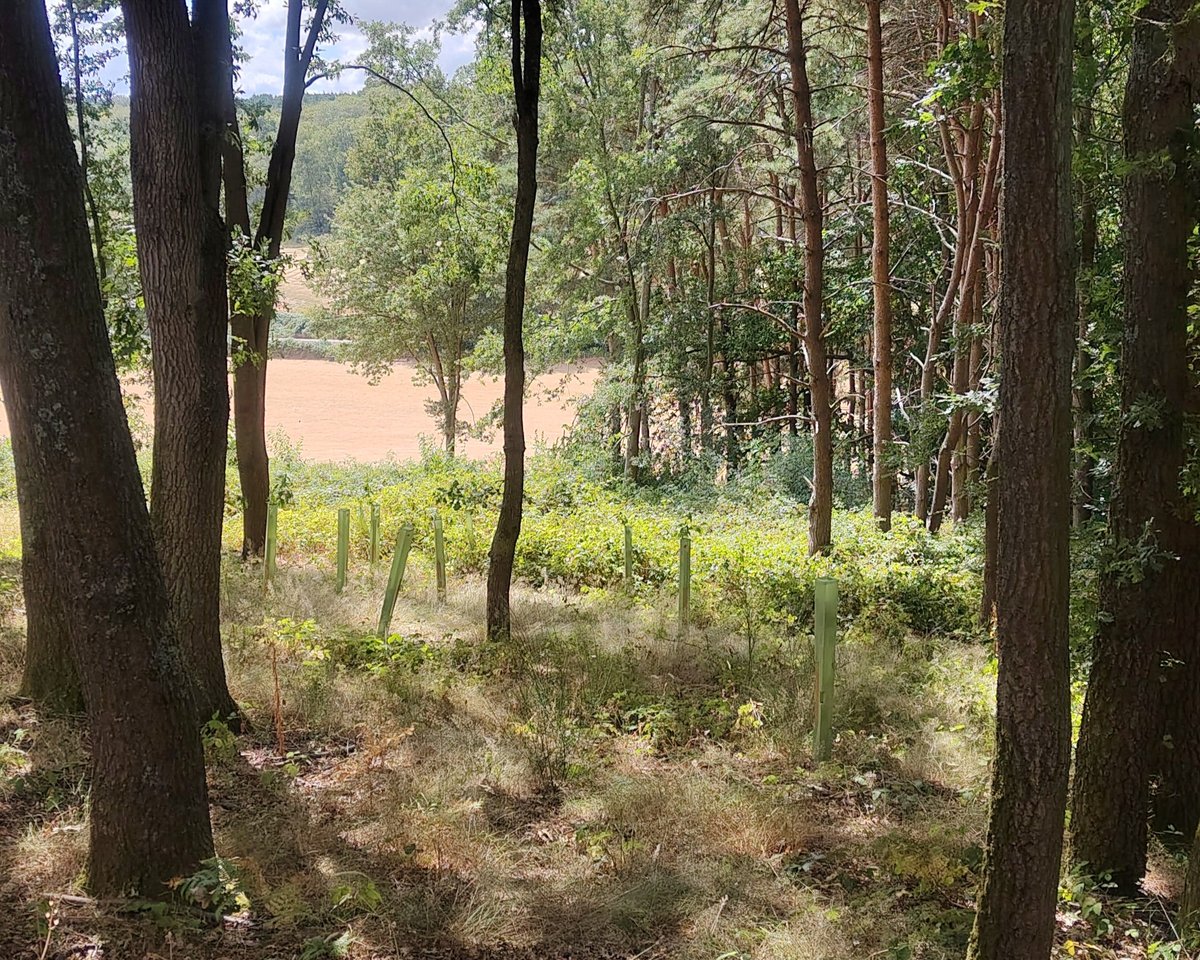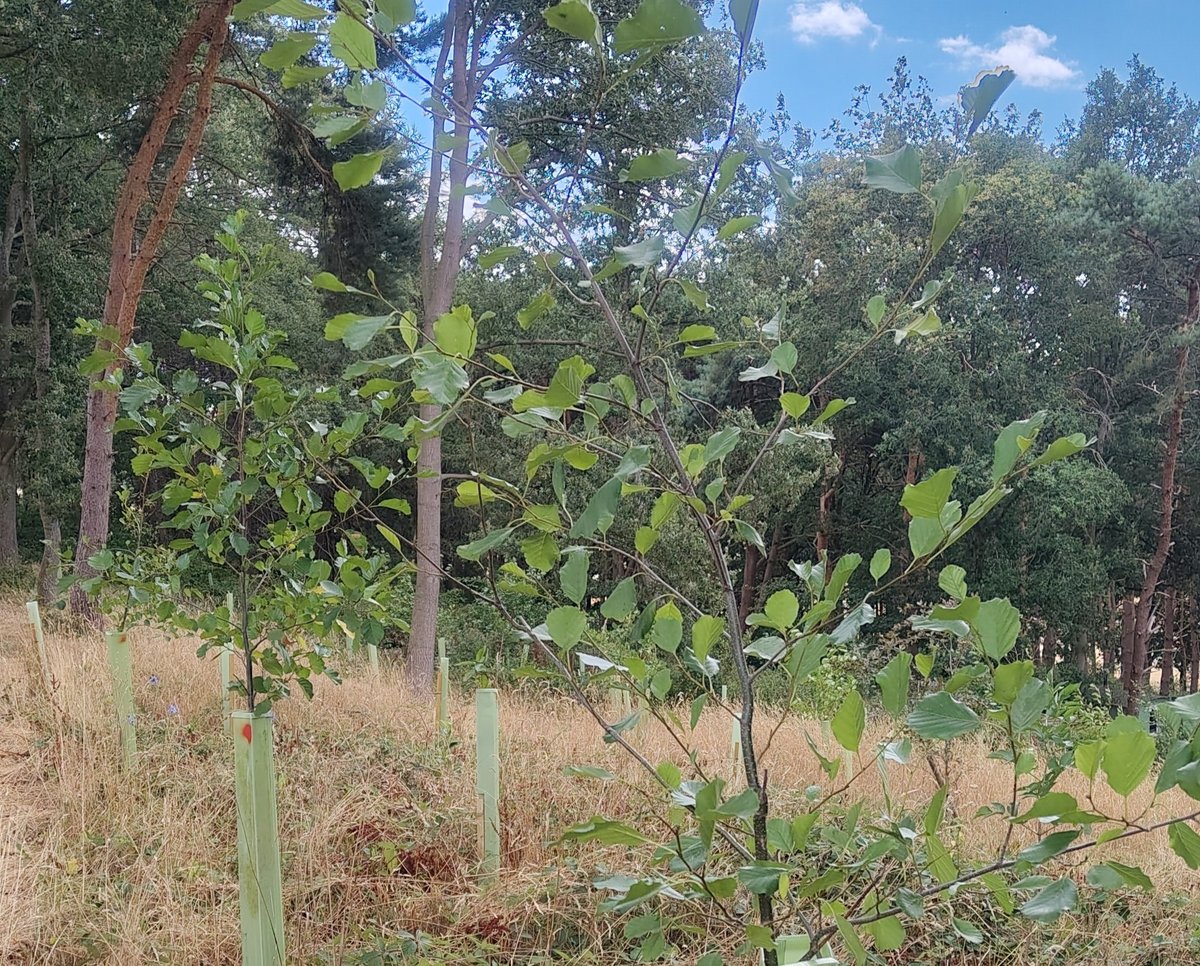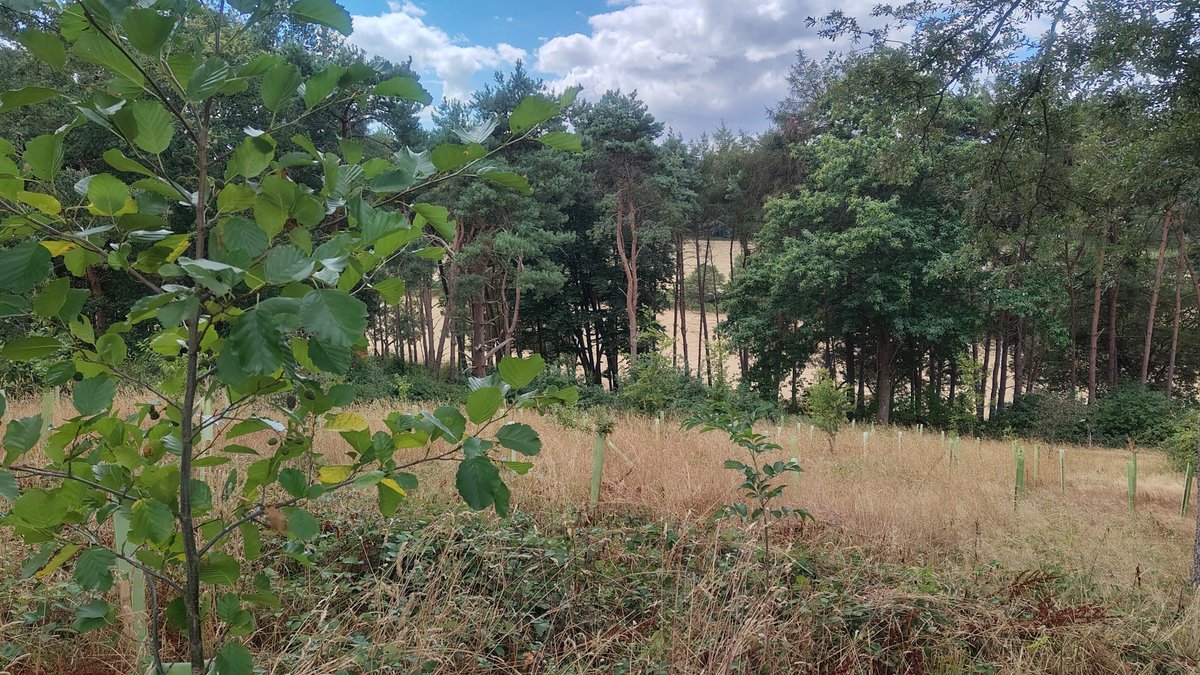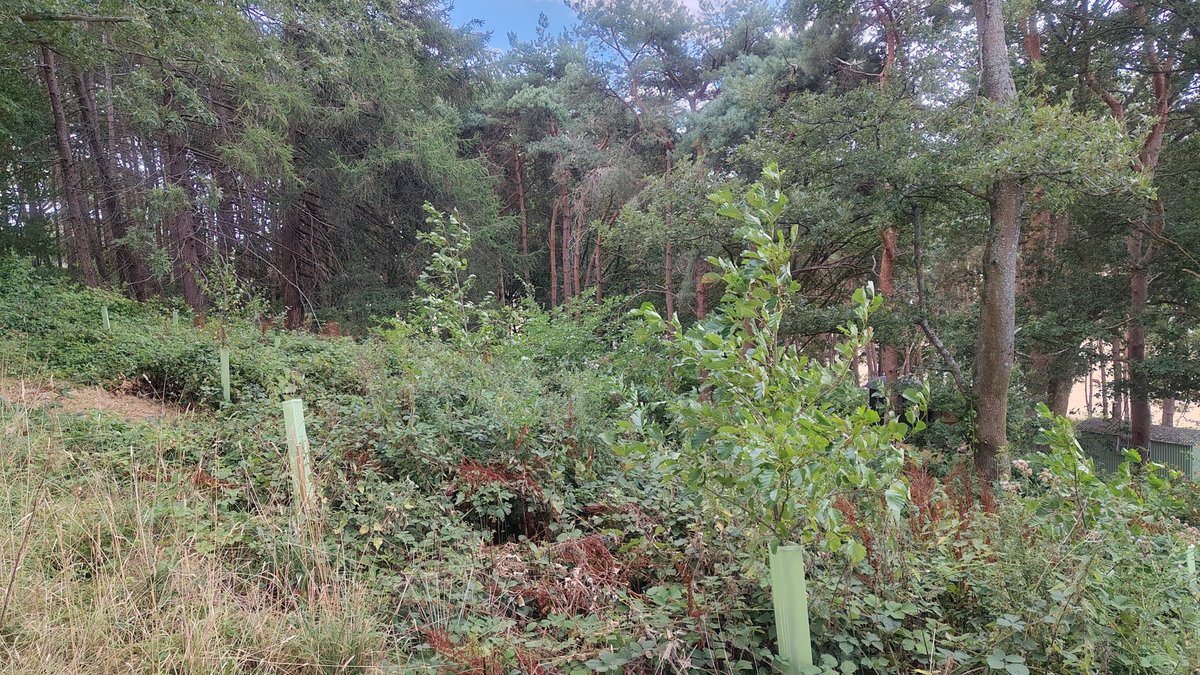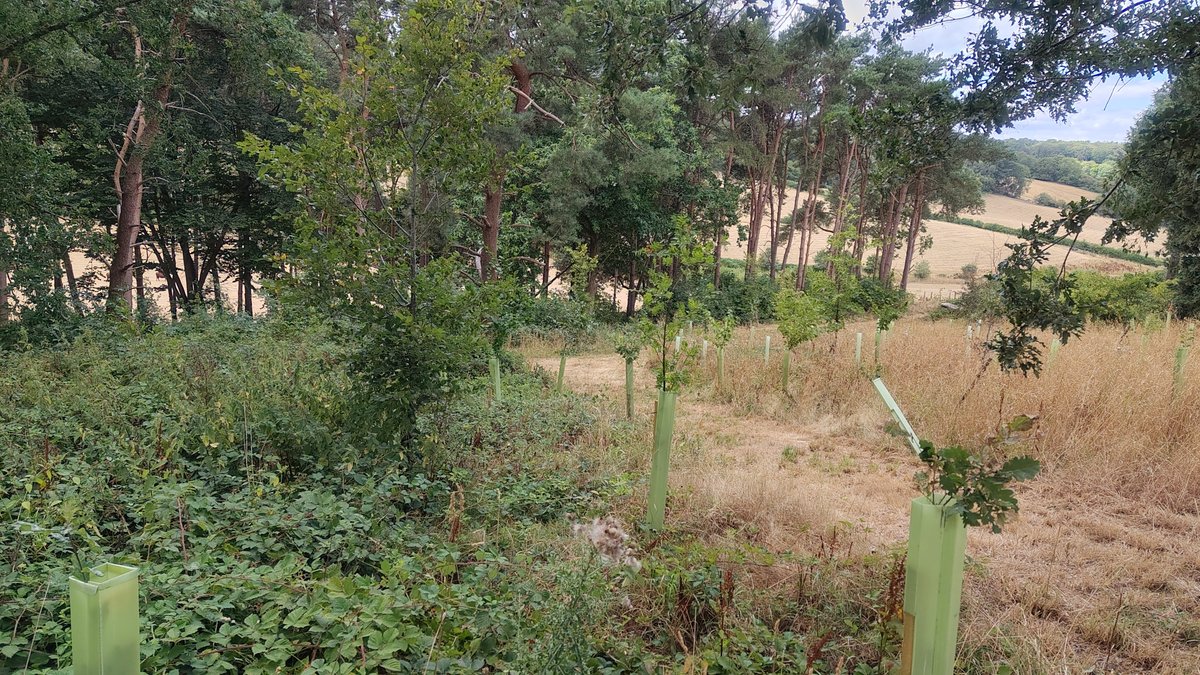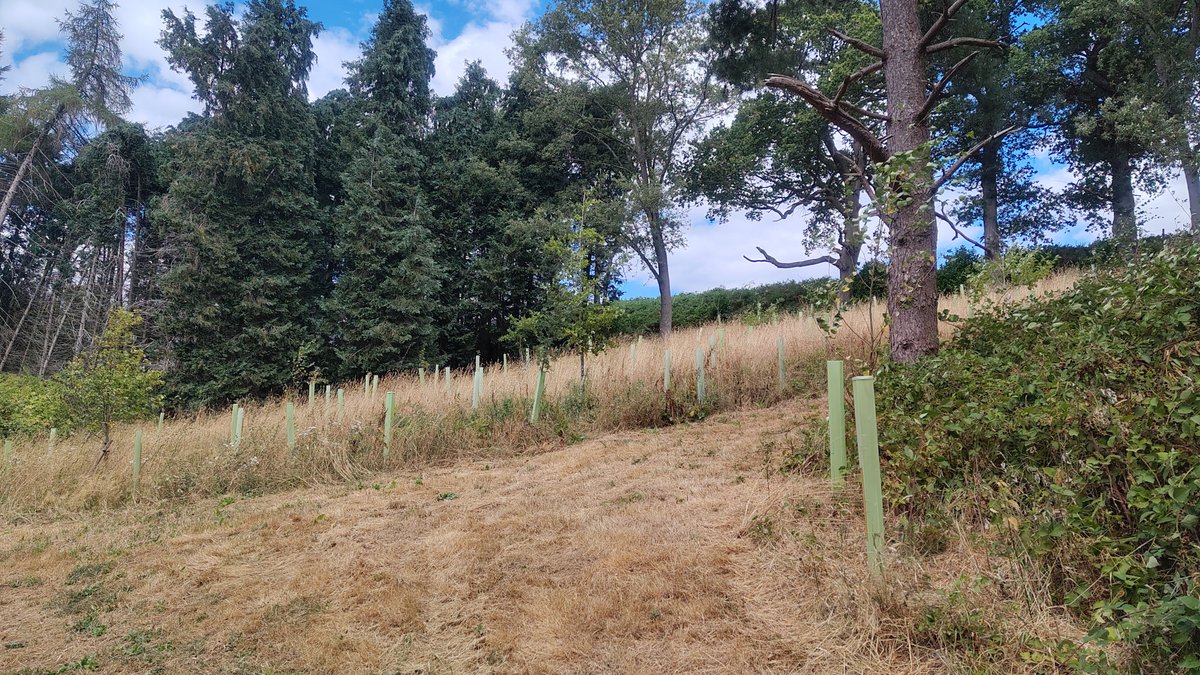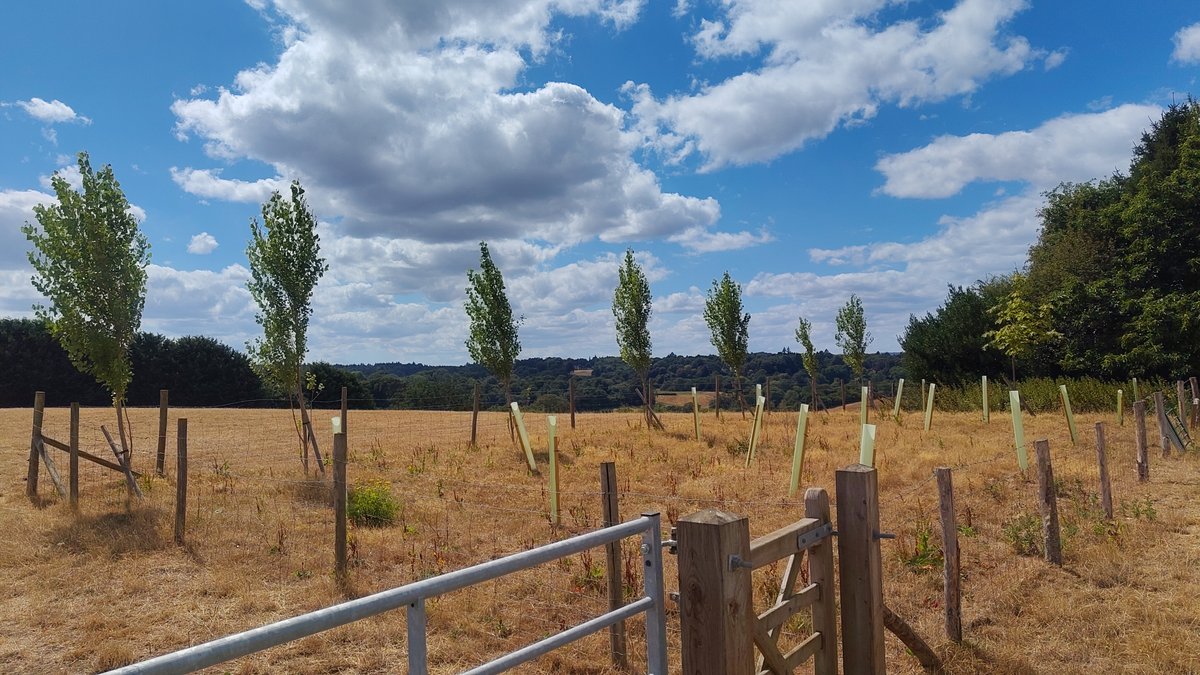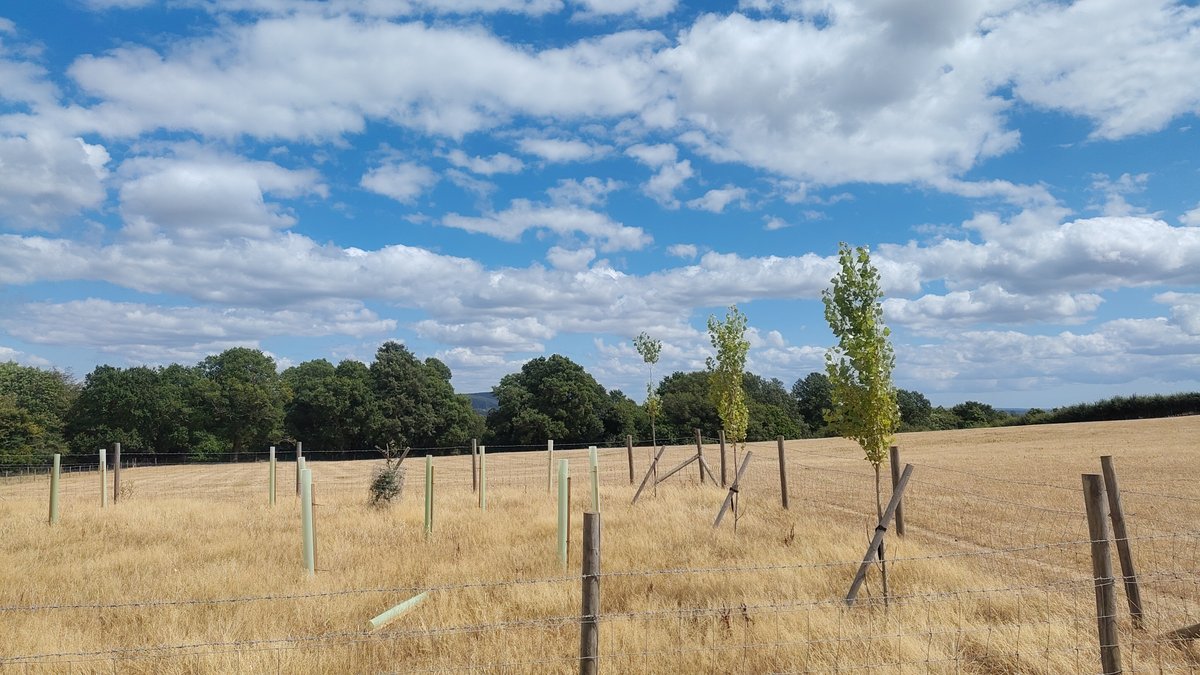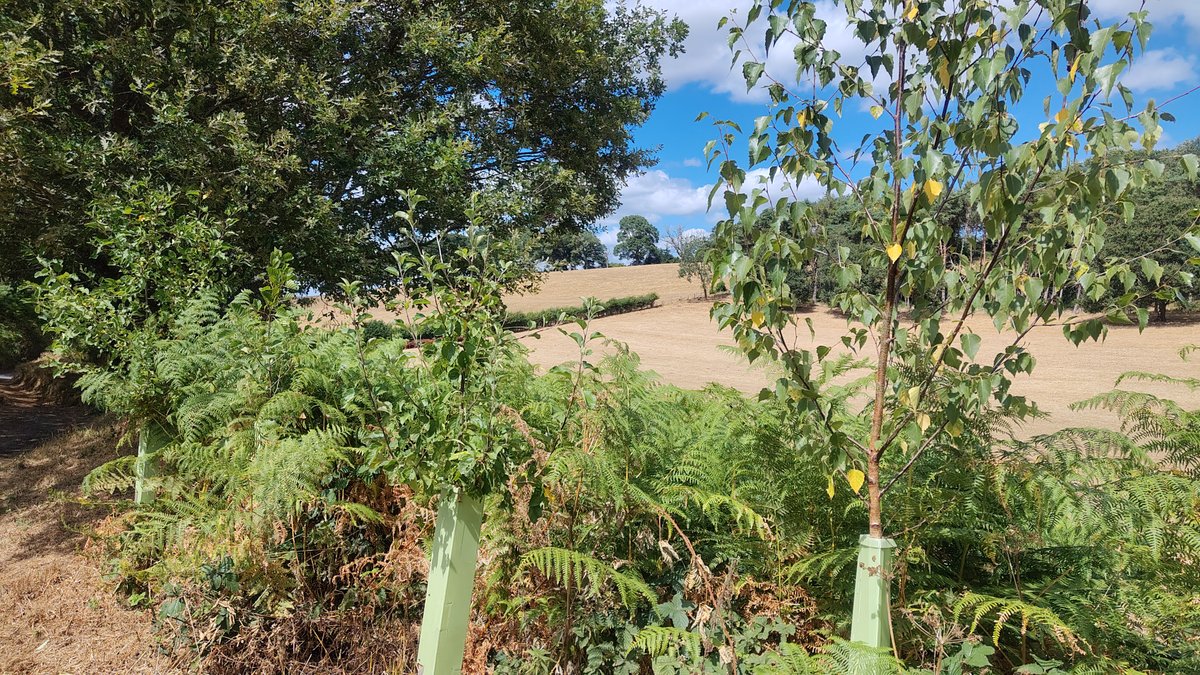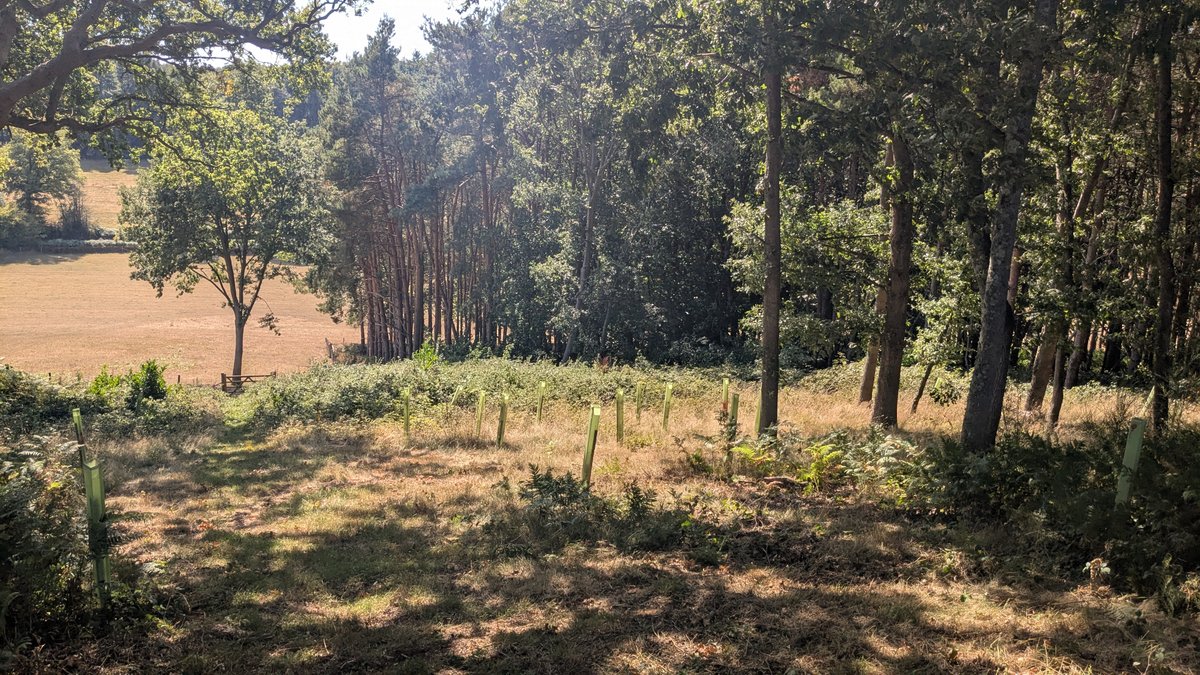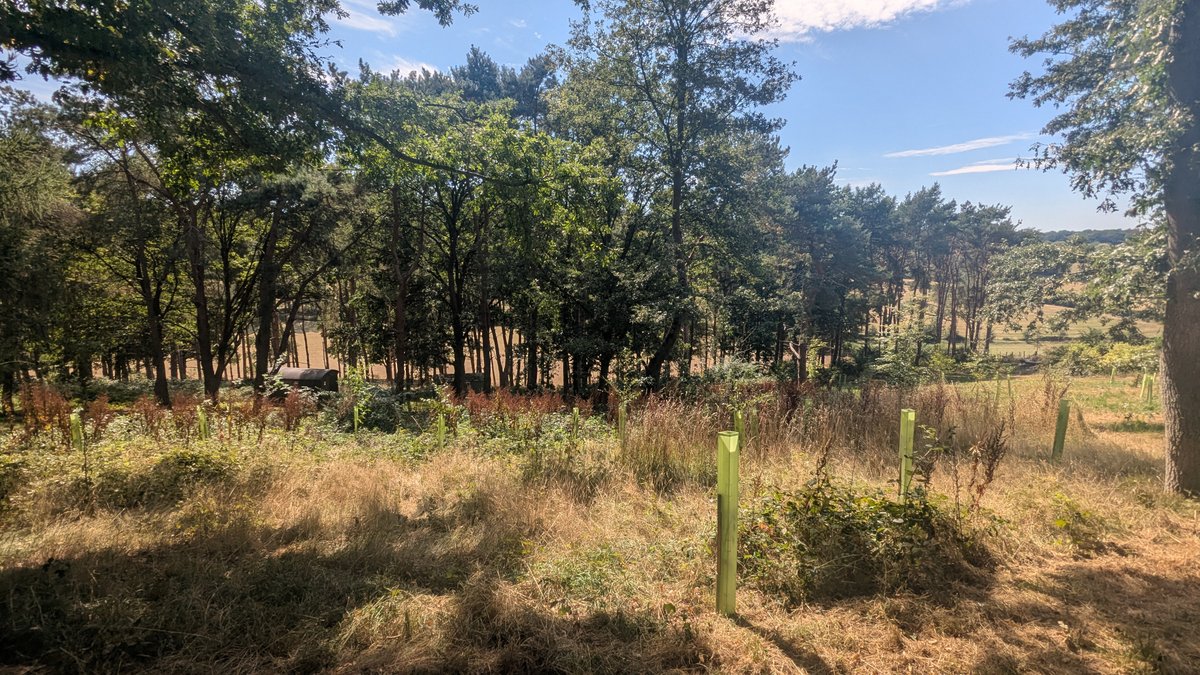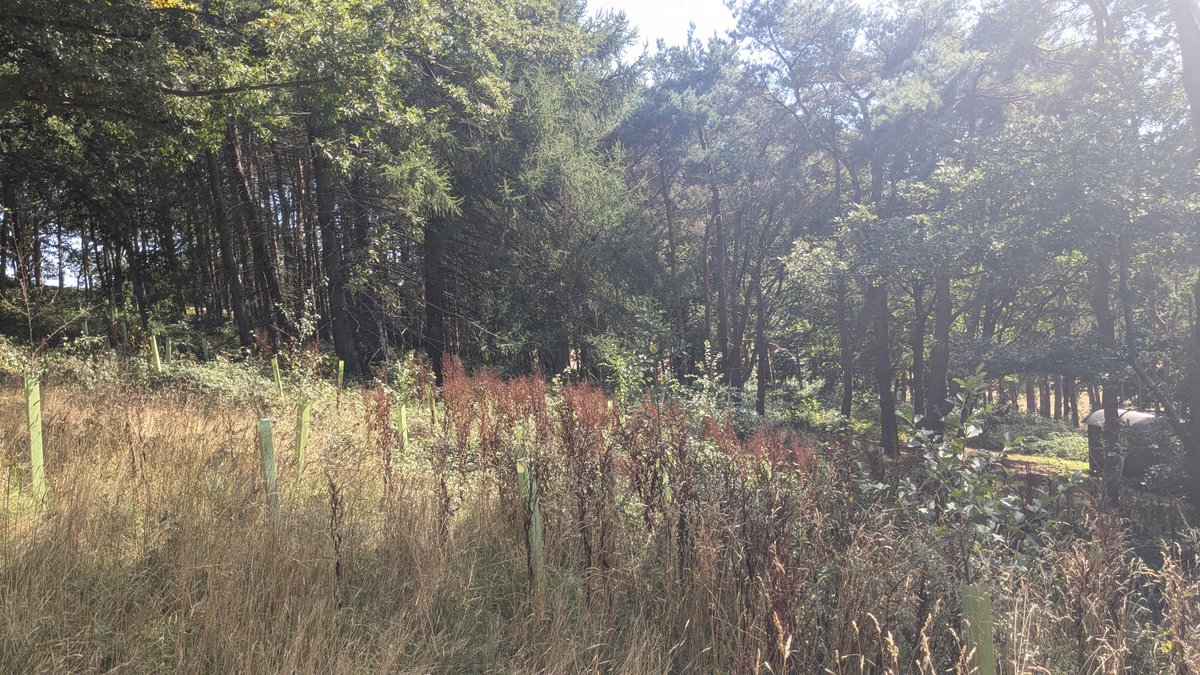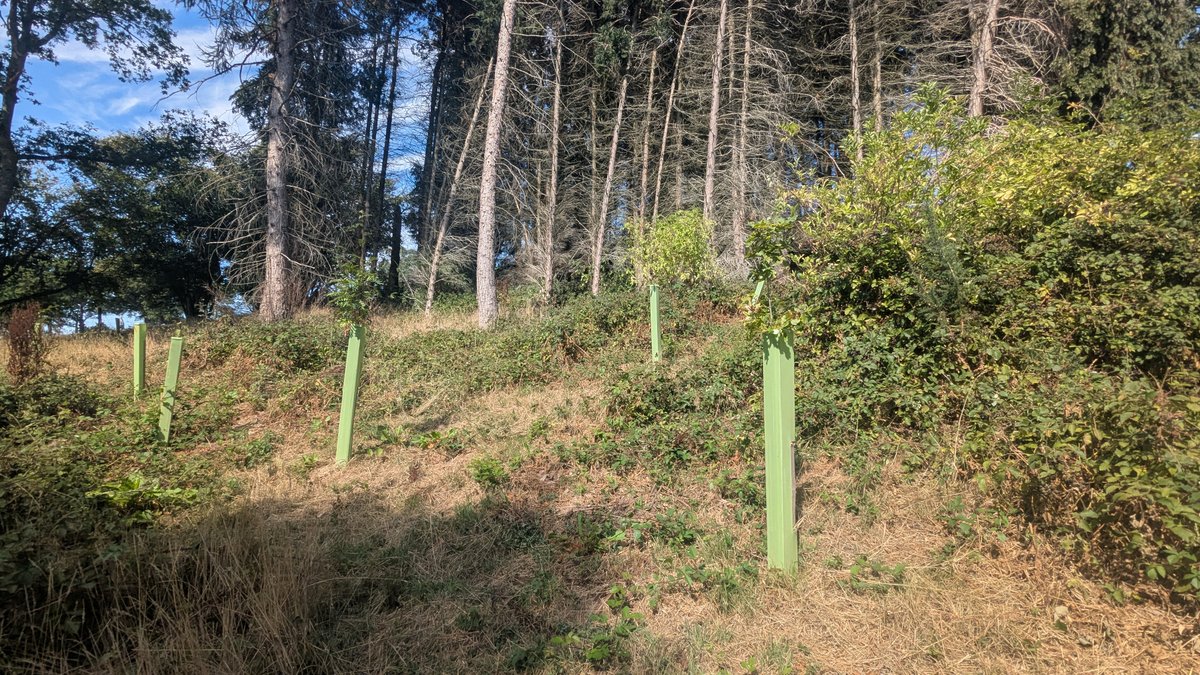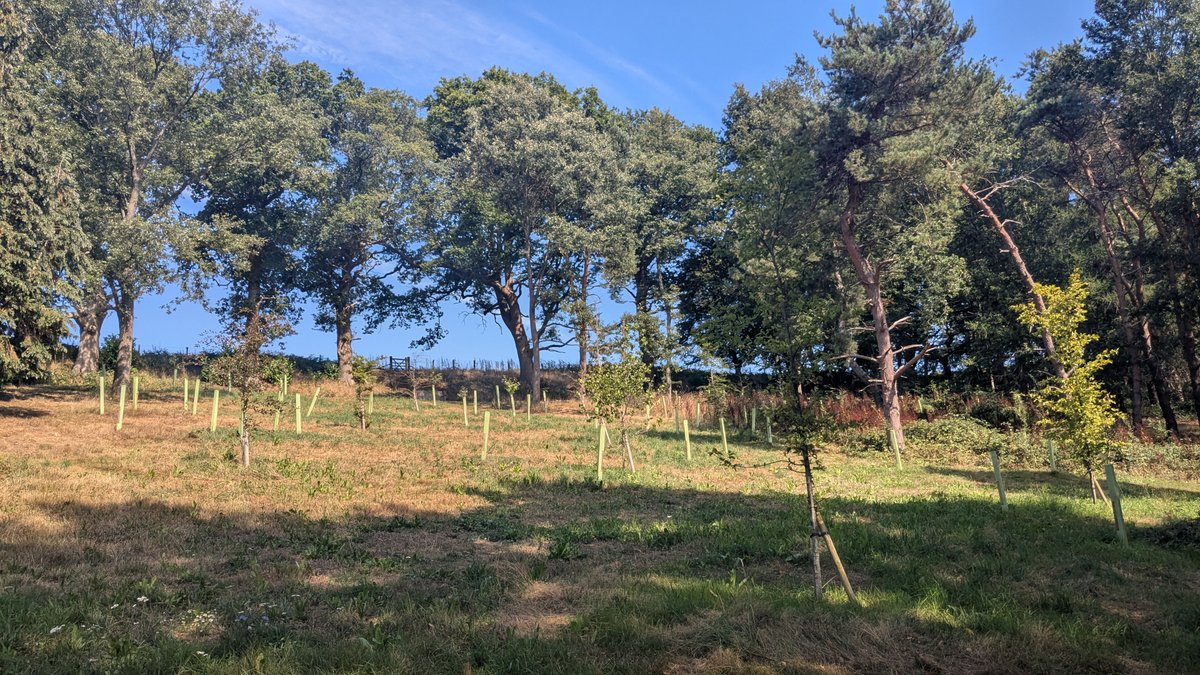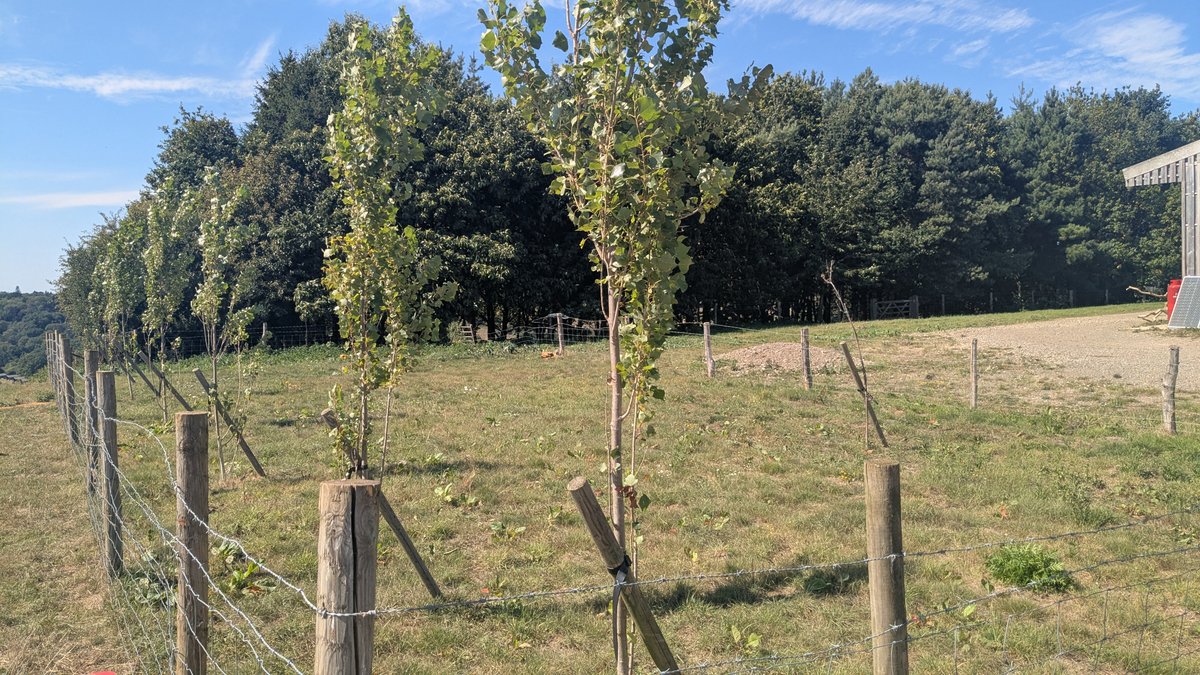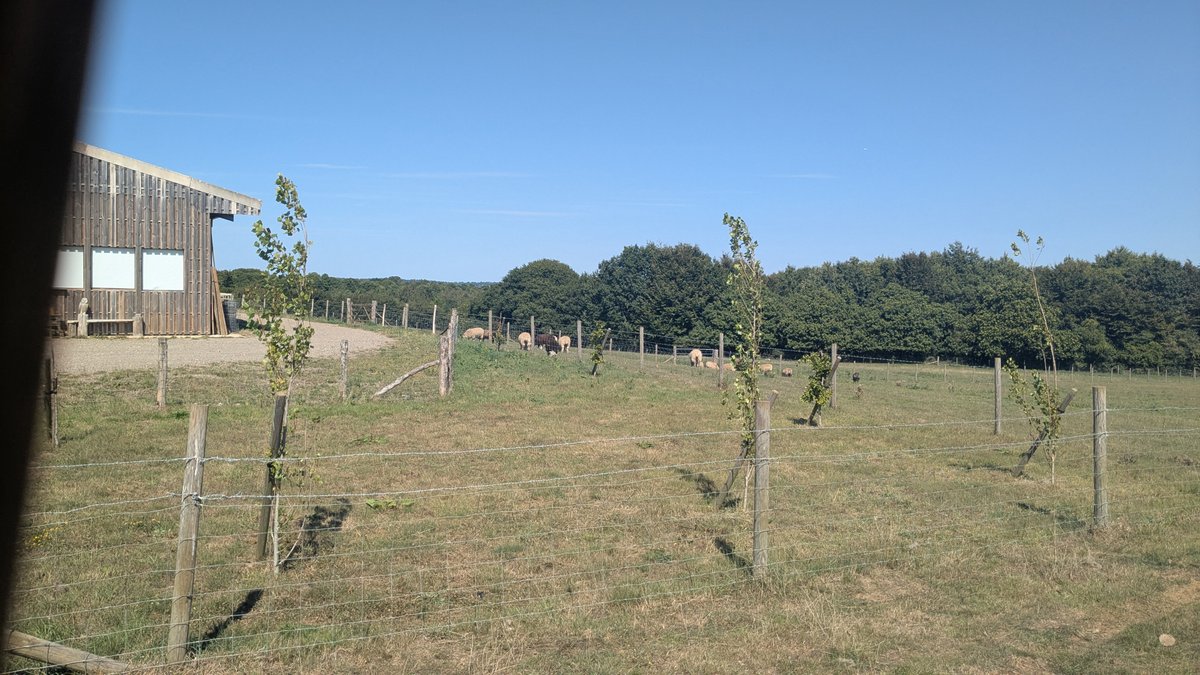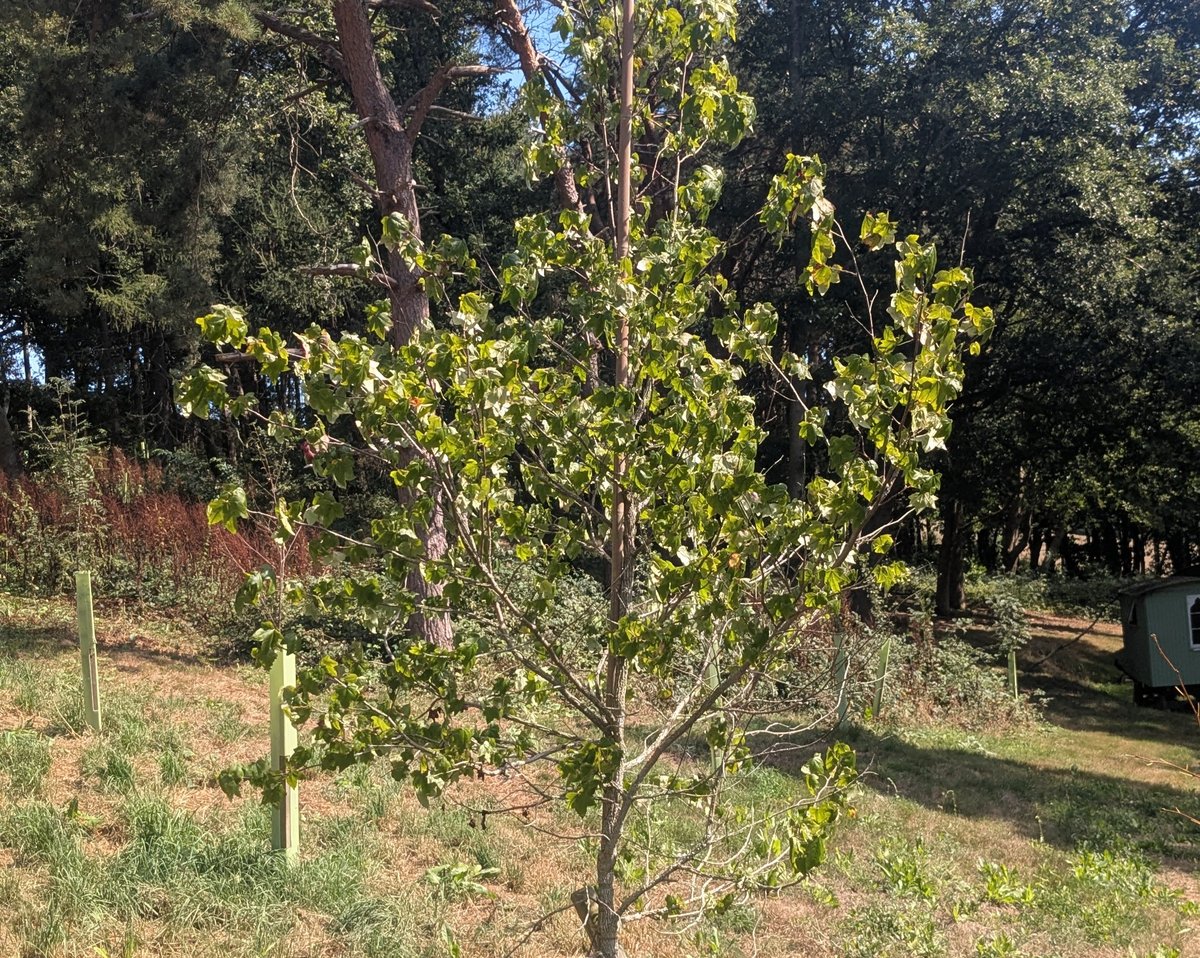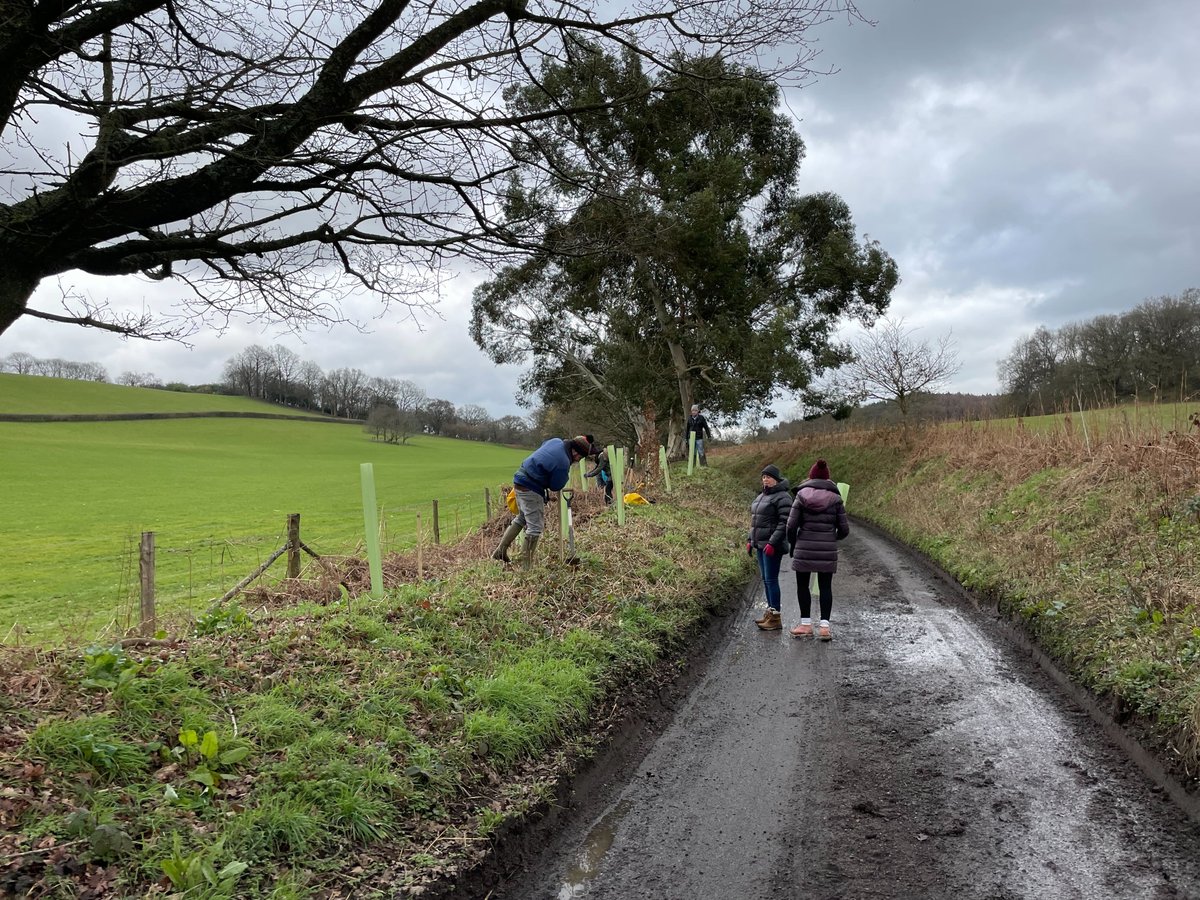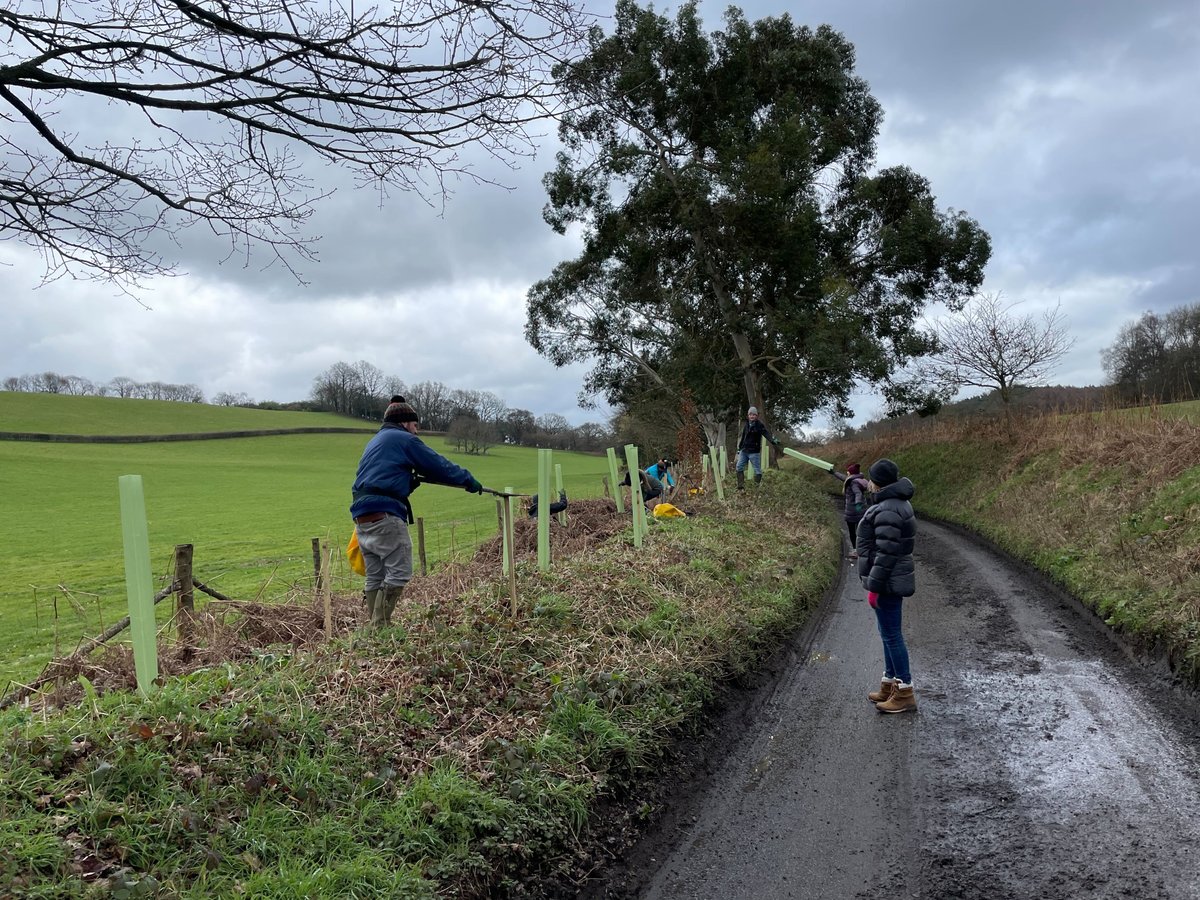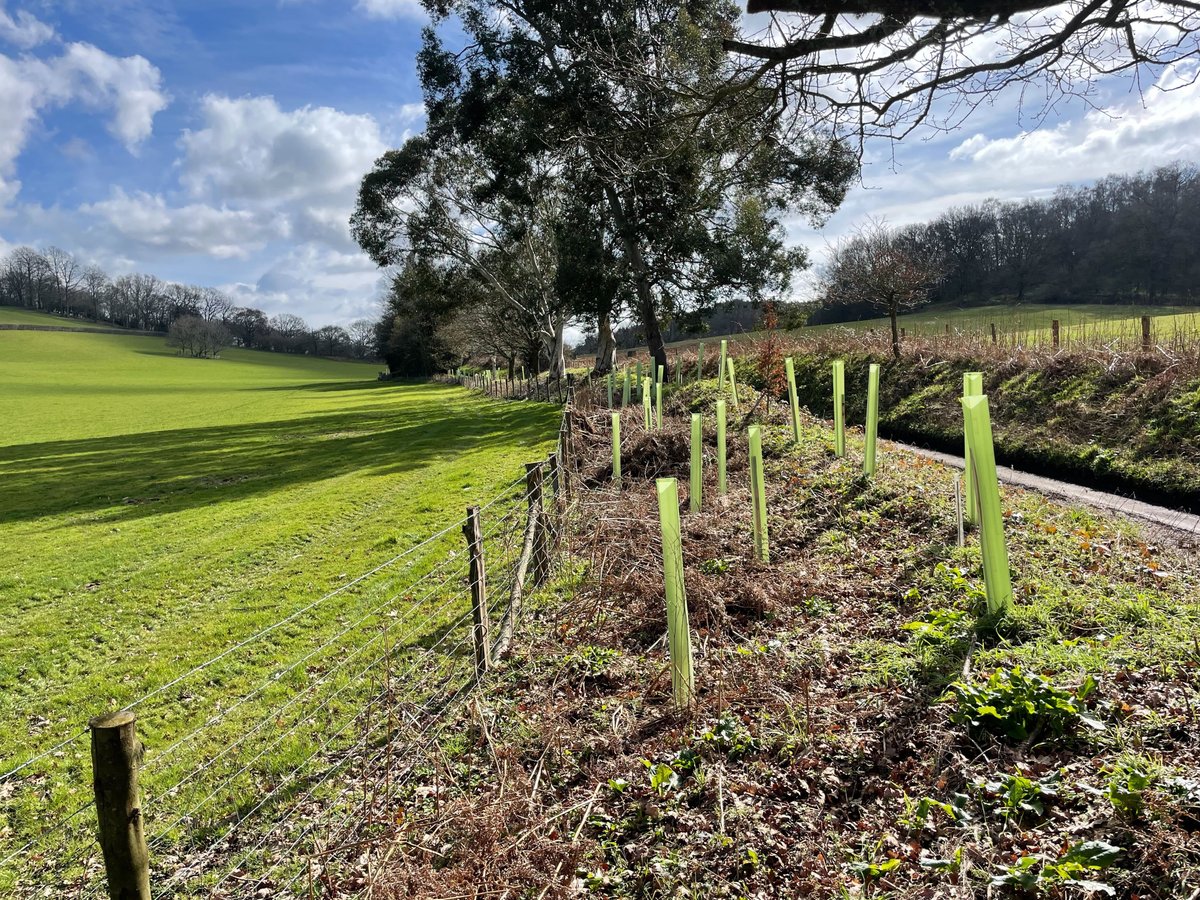

The main wood has a 70% survival rate, and the linear patch of wood on the hilltop is also doing well. We will go back and have a woodland maintenance day and plant a few additional trees to keep the overall survival rate to a maximum.
Thorncombe Street
Godalming, Surrey
Thorncombe Street is a beautiful Hamlet (confusingly!) close to Guildford. Protect Earth were brought on board to help plant several shelterbelts, as well as the beginnings of a new woodland and a vastly improved ancient woodland.
This was a bit of an arduous task, as the woodland had to be stripped of invasive Cherry Laurel. You’ve likely seen this, it’s (unfortunately) used a lot in hedgerows. The primary issue with Cherry Laurel is that it’s just too bloody good at growing! It outpaces almost all other native species planted alongside it, and steals all the nutrients, leading to a monoculture. That is, as you might imagine, working entirely against what we’re trying to do, and that is to reintroduce rich and vibrant ecosystems. So, out with the loppers!
After cutting a swathe through them, we were then able to plant some local variants of trees, ensuring a much wider variety in the immediate vicinity of the planting area. By creating these areas of diversity, it means that all manner of little critters and beasties are able to make their homes in and amongst the trees.
Site Updates
Thorncombe Street is a beautiful Hamlet (confusingly!) close to Guildford. Protect Earth were brought on board to help plant several shelterbelts, as well as the beginnings of a brand new ancient forest. This was a bit of an arduous task, as first we had to strip back the land from some invasive Cherry Laurel. You’ve likely seen this; it’s (unfortunately) used a lot in hedgerows. The primary issue with Cherry Laurel is that it’s just too bloody good at growing! It outpaces almost all other native species planted alongside it, and steals all the nutrients, leading to a monoculture. That is, as you might imagine, working entirely against what we’re trying to do, and that is to reintroduce rich and vibrant ecosystems. So, out with the loppers!
After cutting a swathe through them, we were then able to plant some local variants of trees, ensuring a much wider variety in the immediate vicinity of the planting area. By creating these areas of diversity, it means that all manner of little critters and beasties are able to make their homes in and amongst the trees.
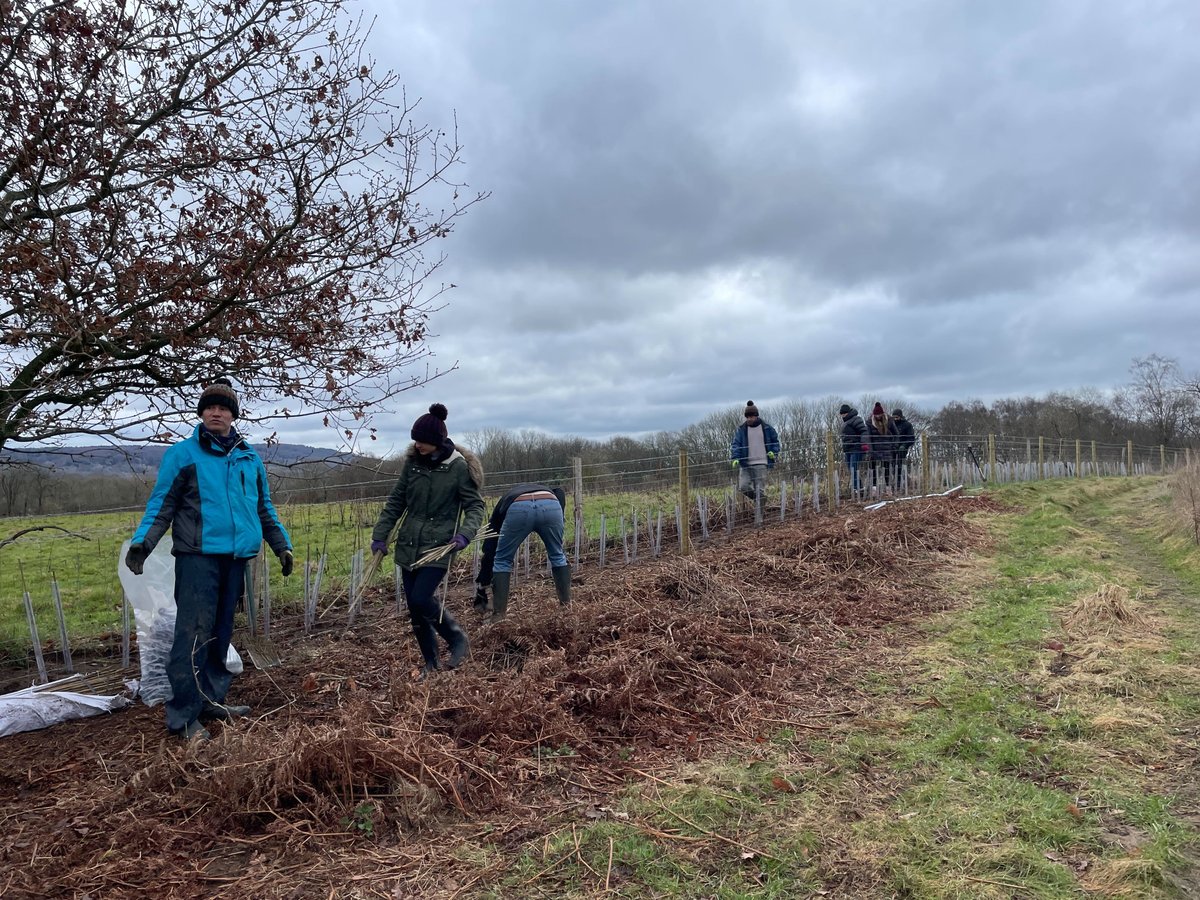
In February 2026, Duncan returned with a bunch of volunteers to carry out a targeted restock across the site. A total of 460 trees were replanted to replace losses identified during Angus’ survival rate survey conducted at the end of summer 2025.
The volunteers carried out the restocking and maintenance work, checking existing planting lines and ensuring replacement trees were distributed evenly across the site to support the healthy establishment of both the original planting and the newly restocked trees over time.
Site Location
Help Protect Earth - Take Action Now
Volunteer
Help us create and maintain new woodlands, hedgerows and wildflower meadows! We need volunteers to sow seeds, plant saplings, clear invasive plant species and pick up litter. No qualifications necessary; jobs for all ages and abilities. Come and turn climate anxiety into climate action!
Fund Our Work
With government funding for reforestation and rewilding tenuous, we increasingly rely on our amazing community to keep us growing regardless of political shifts. Help Protect Earth continue to restore ecosystems and improve biodiversity across the country.
Support the Land Fund
Help us put down roots! Your donations to our Land Fund let us seize the moment when the perfect piece of land comes up for sale. Every penny helps us secure community woodlands, healthier ecosystems, and a greener future for generations to come.