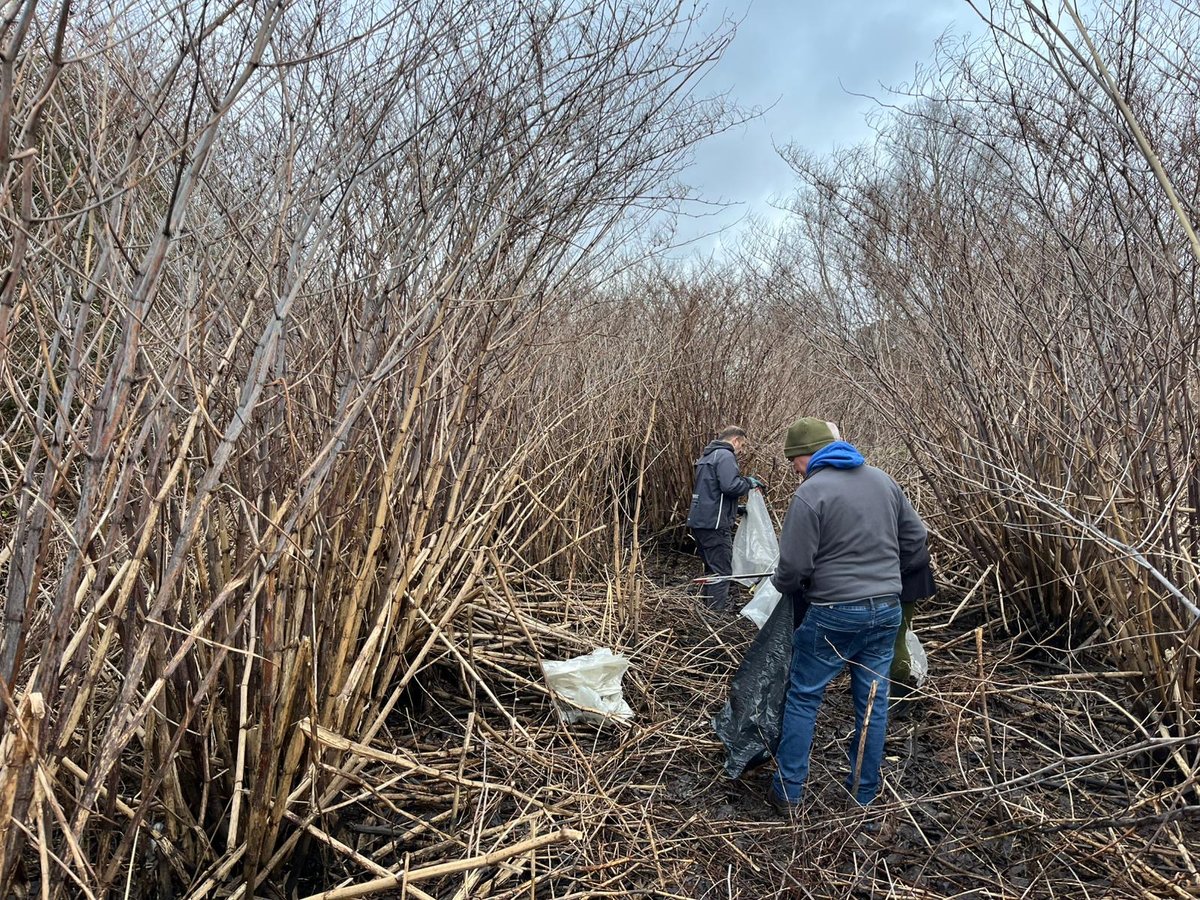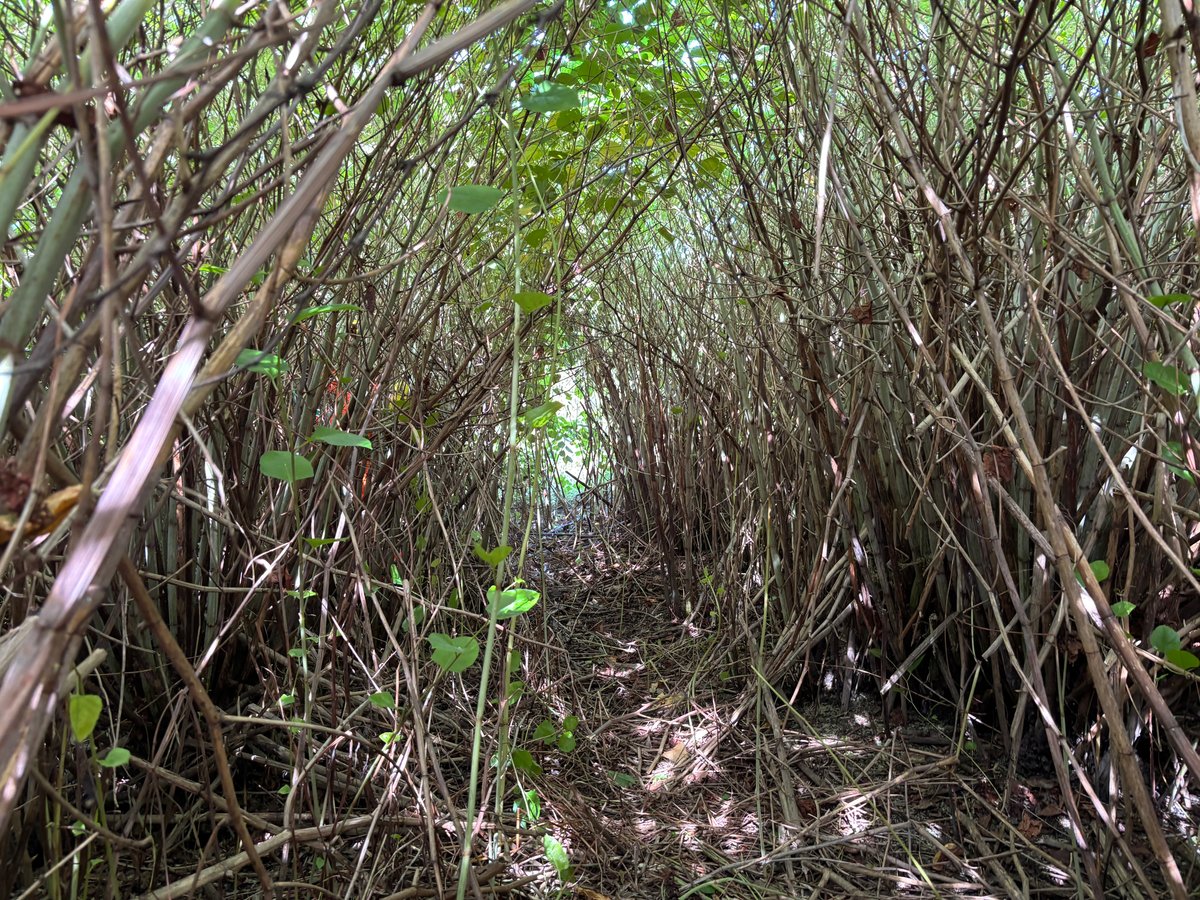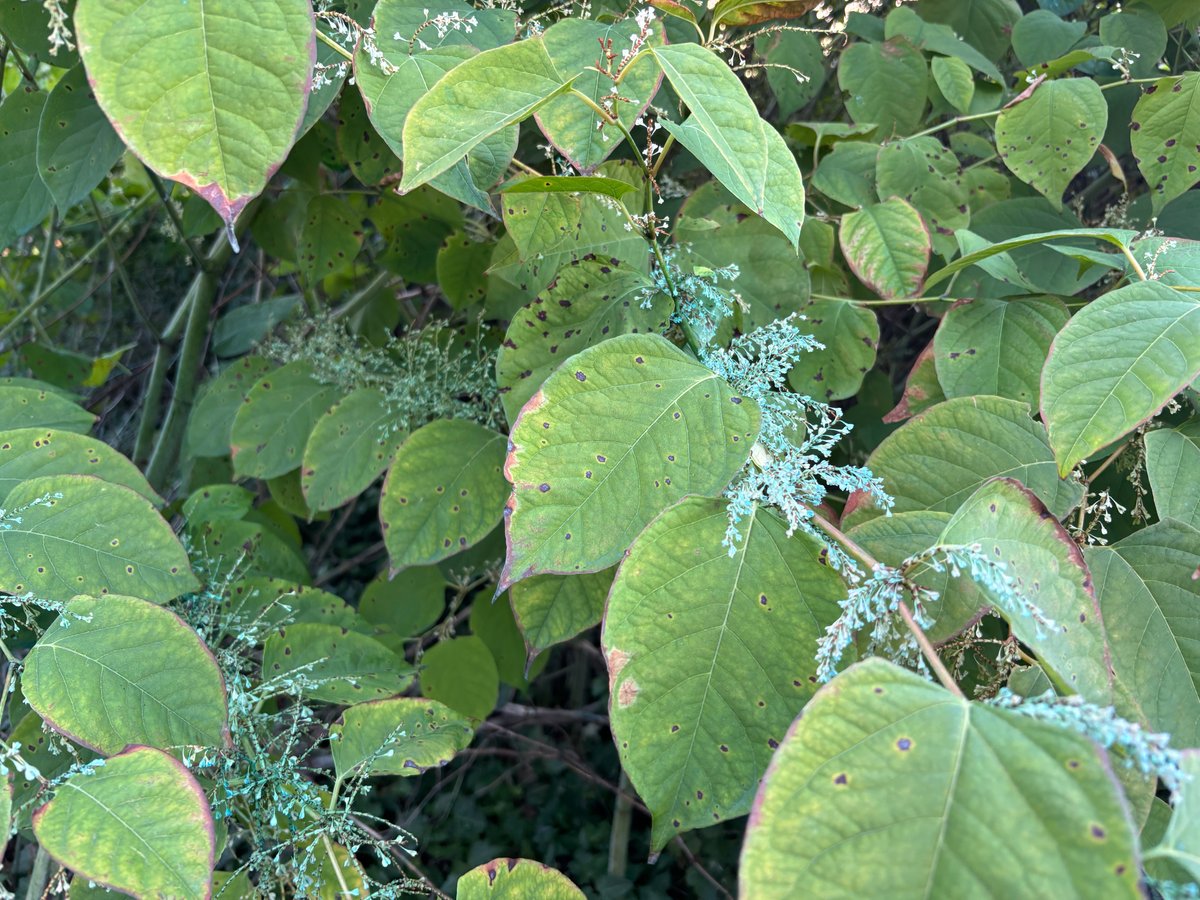

Every autumn Japanese Knotweed sends nutrients back underground, leaving behind dead thickets of thick woody stems above ground by winter. These thickets are generally above head height, making it difficult to navigate for further treatment and removal work. They are also extremely flammable, and in a tidal marsh like River Roding they will catch rubbish, making the fire hazard even worse.
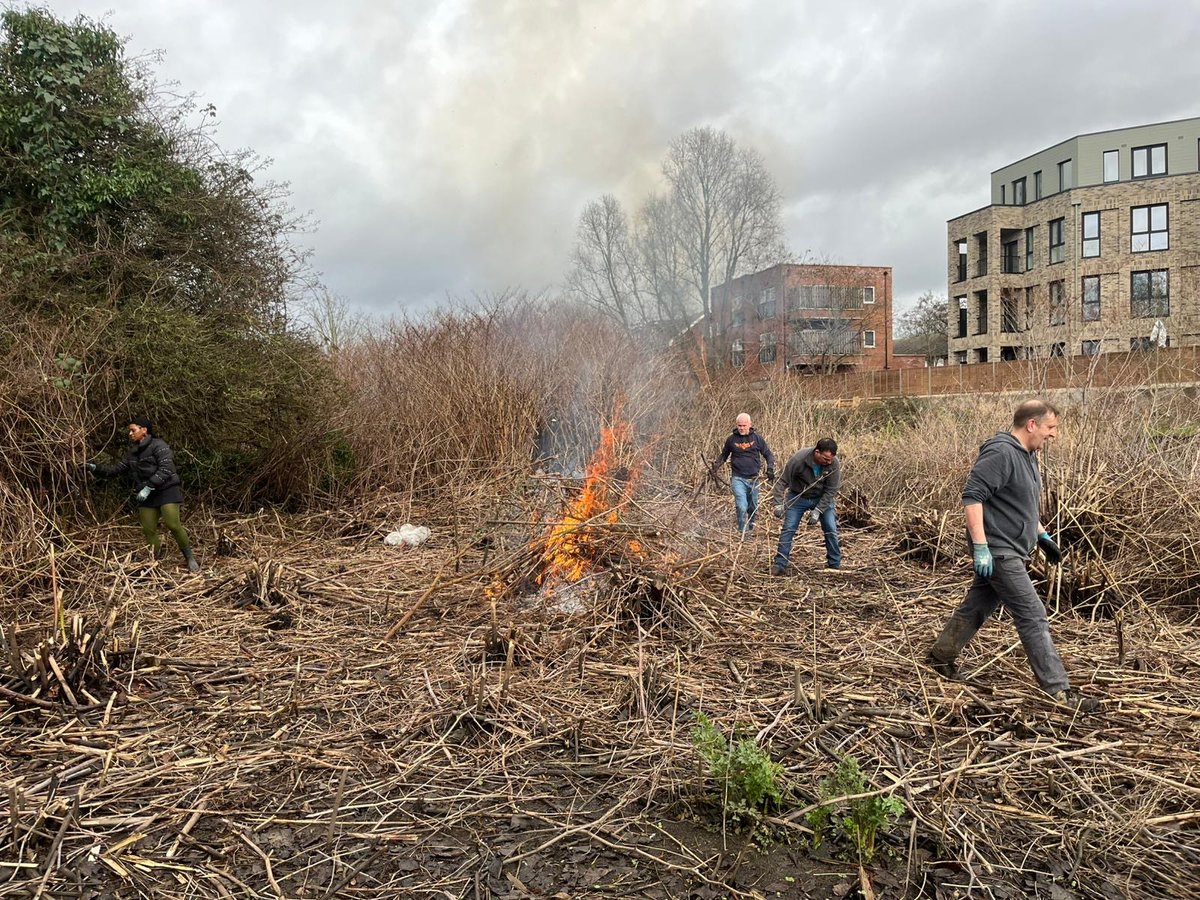
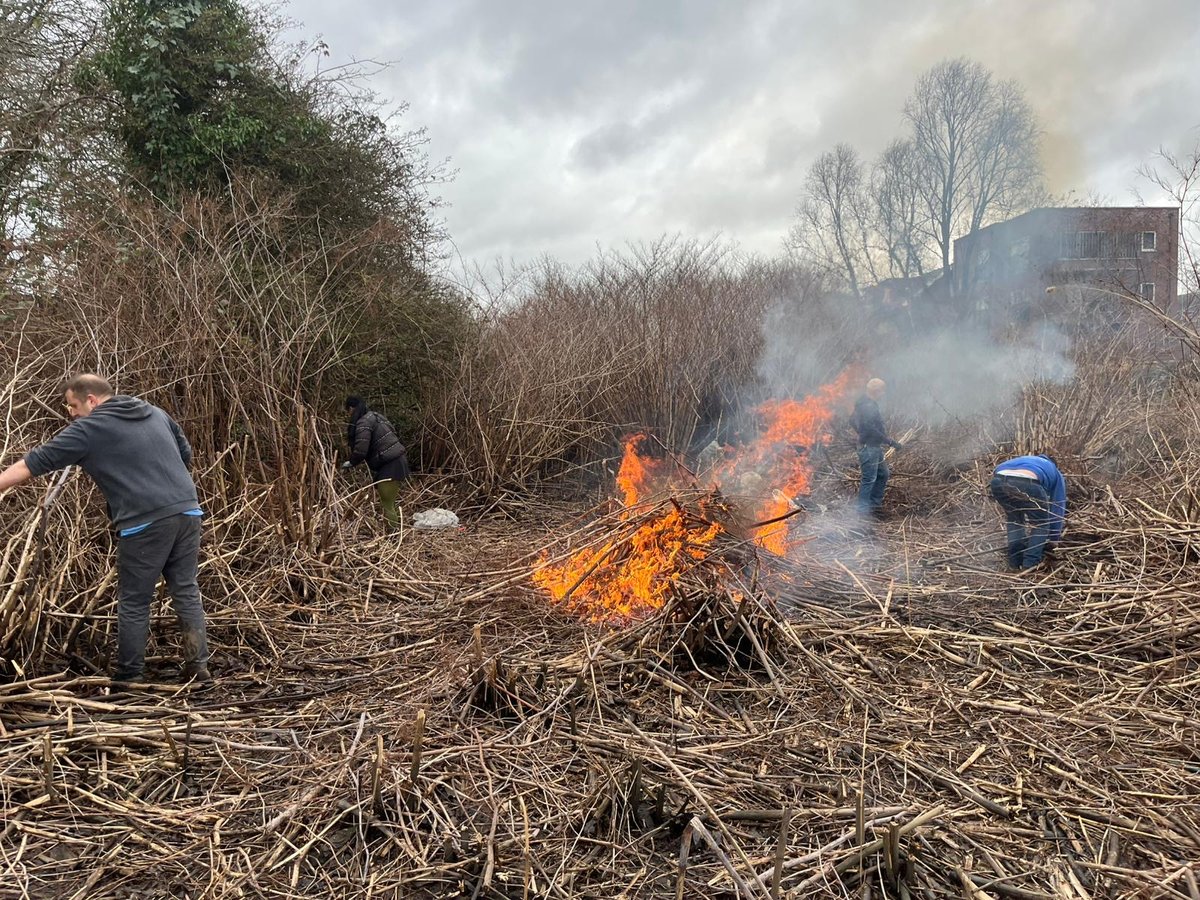
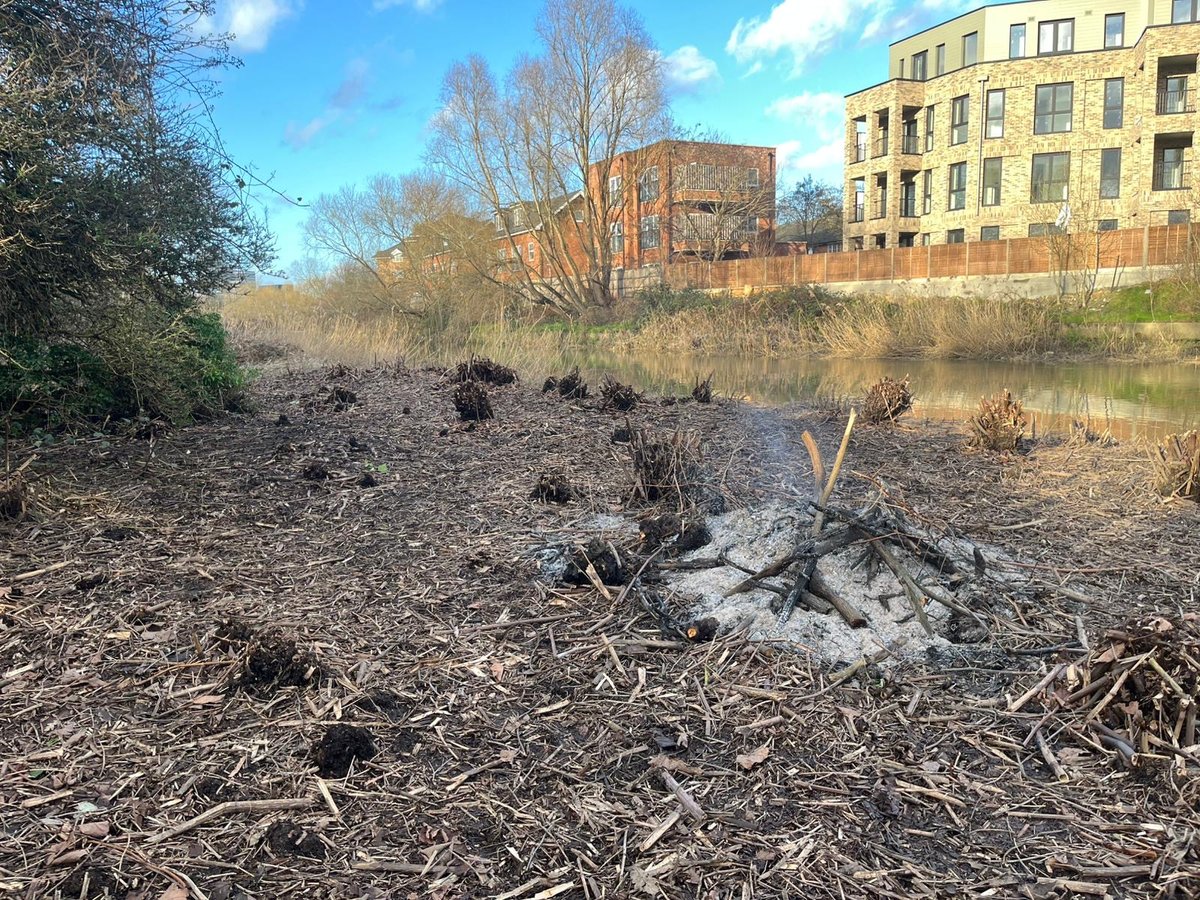
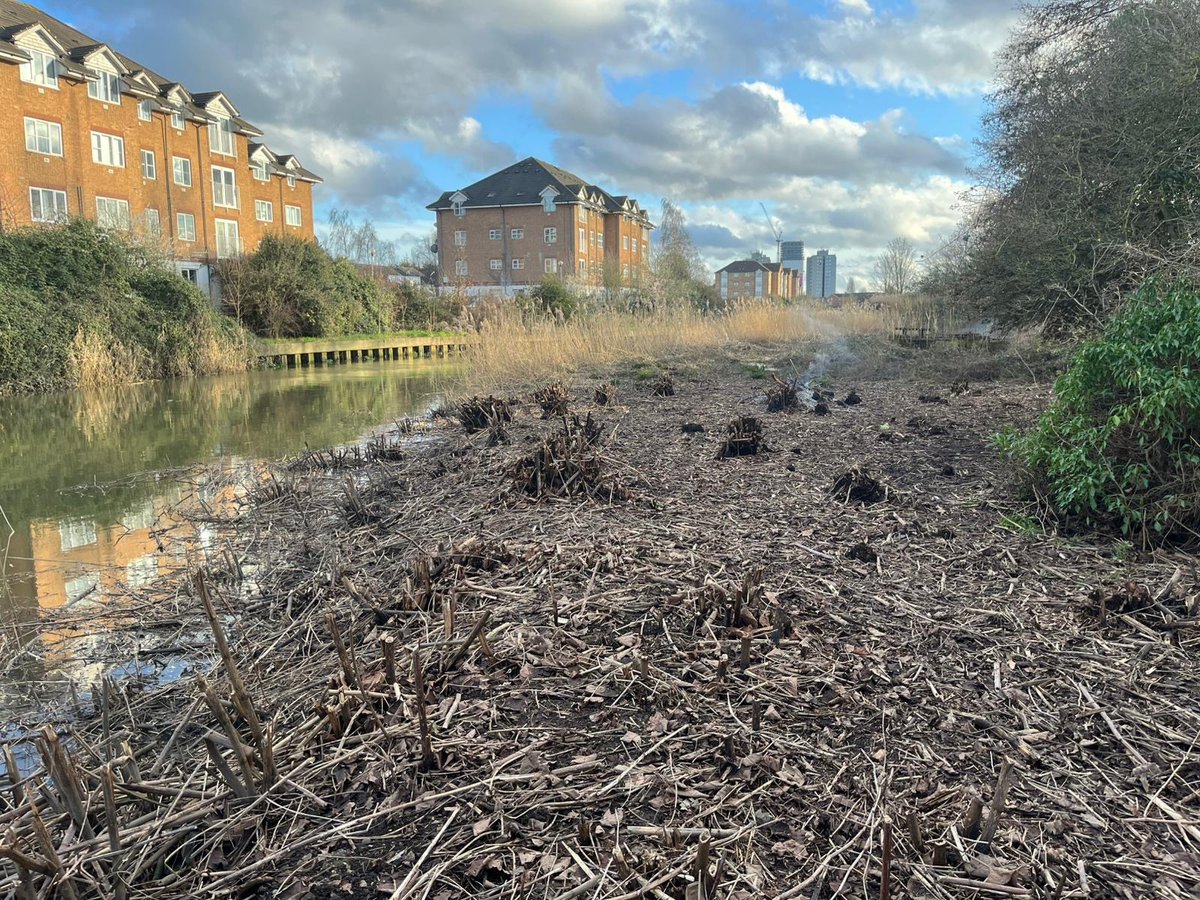
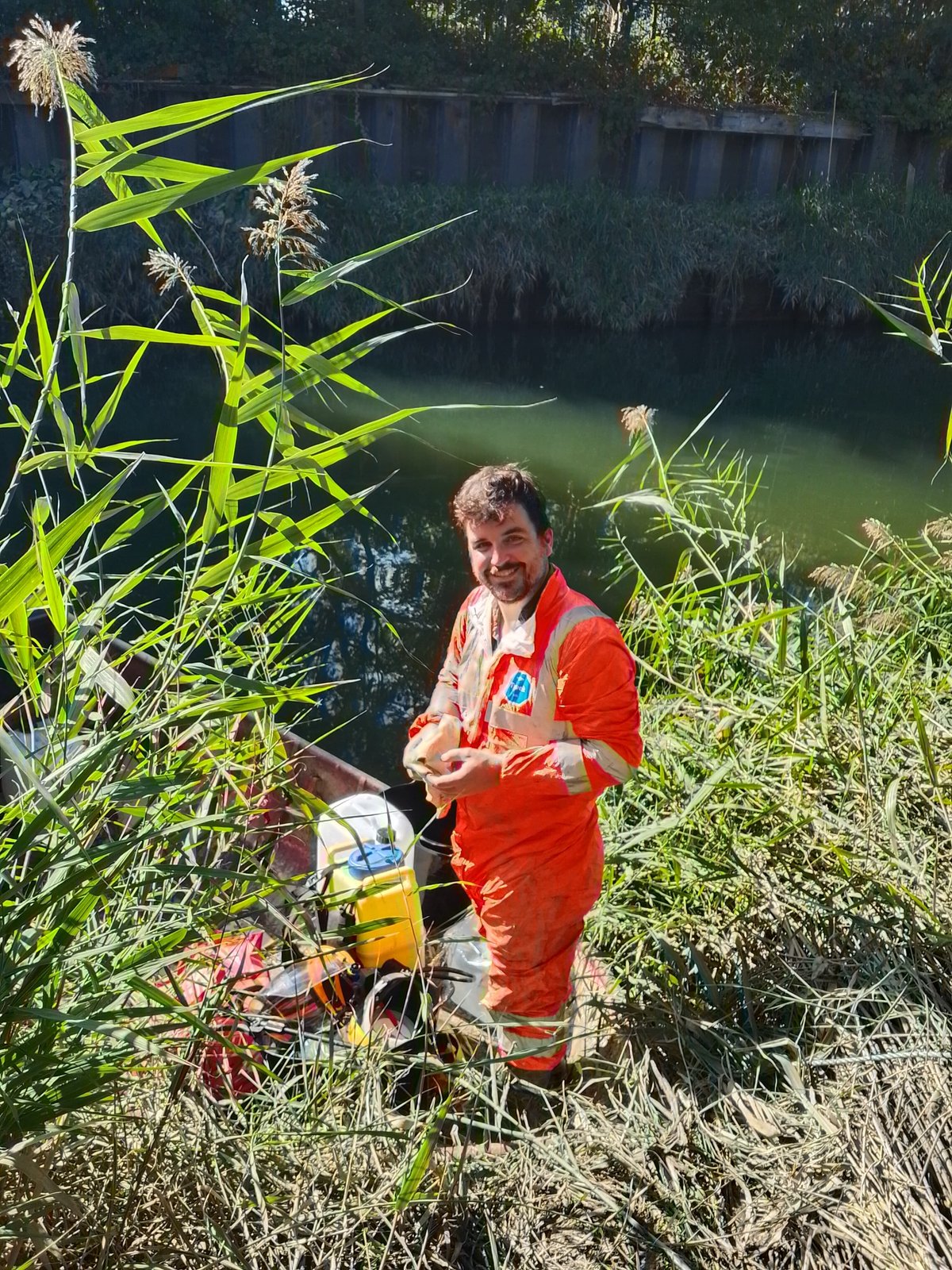
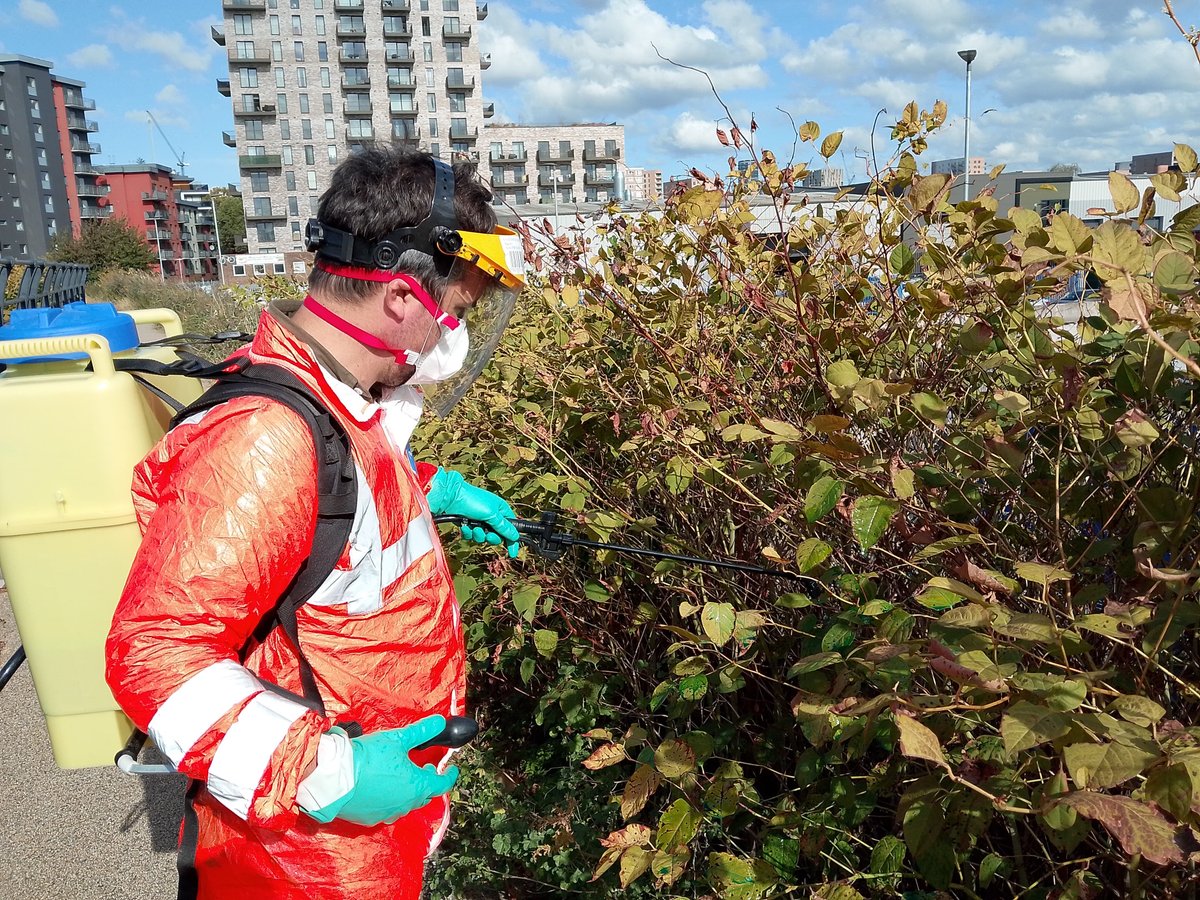
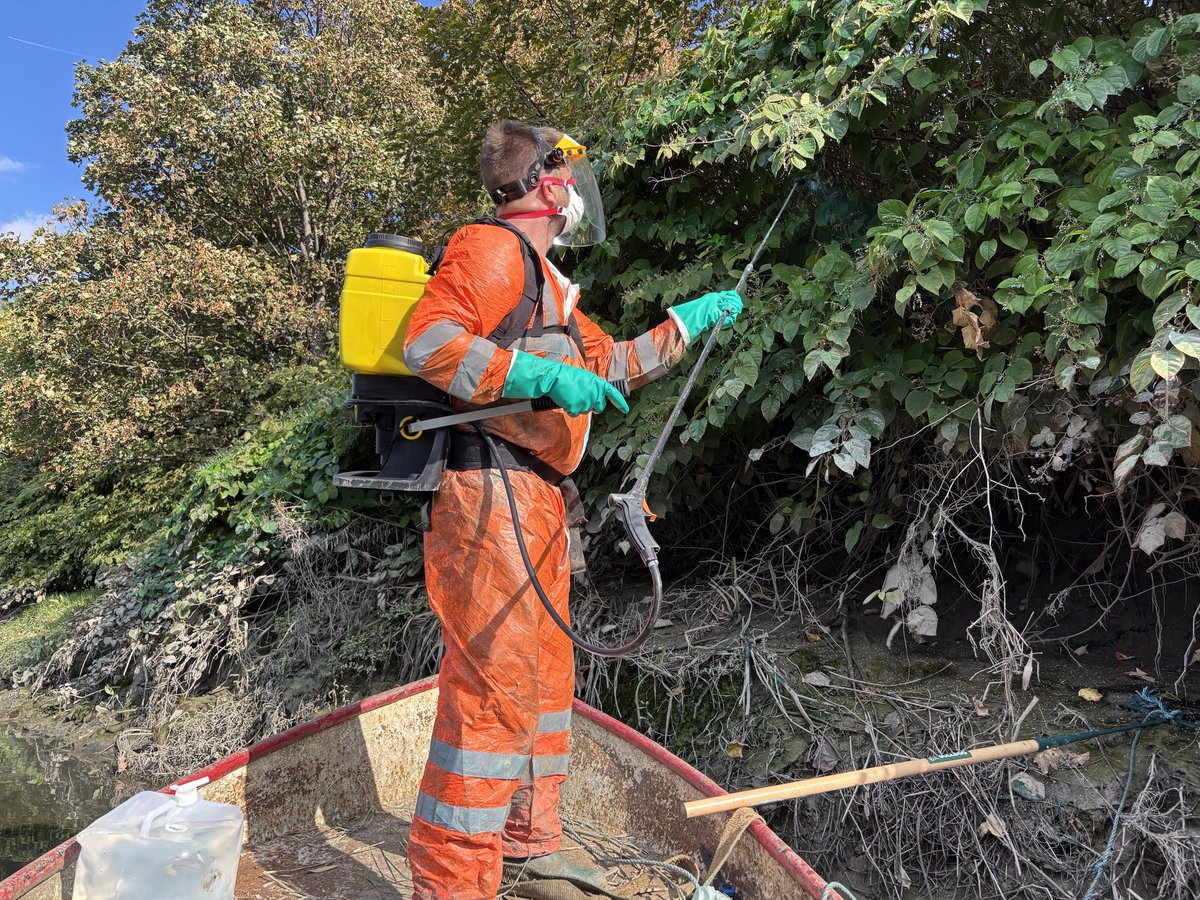
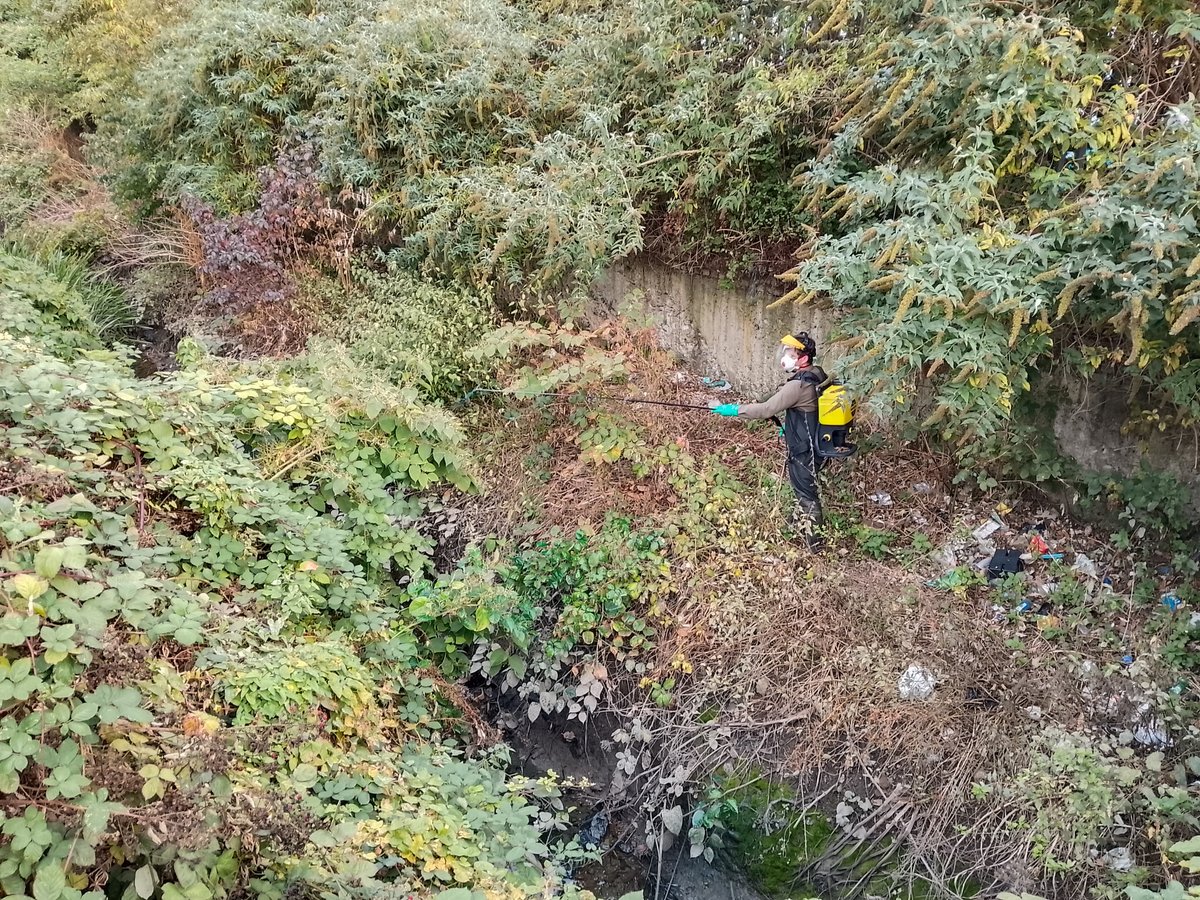
Volunteers from River Roding Trust got stuck in to solving the problem, cutting down all the dead stems, bagging and removing rubbish, and doing all of this impressively on some sites which are only accessible by water. Areas that were previously above head height are now clear down to the ground, which will make it much easier for us to navigate when we go back in September to treat any new growth.
Generally to fix the climate crisis we need to burn less stuff, but there are times where it’s the best approach for invasive species. These areas have difficult access, knotweed is a complicated species to remove. Even the dead stems can regrow, so moving that much material is likely to lead to contamination of surrounding land. Likewise, leaving them in place is not an option here, because in a tidal marsh the currents would spread the material all up and down the river. Burn piles were the way forward here, and all of that carbon will be sequestered when the knotweed is fully exterminated and the reed beds can once again recolonise riverbanks.