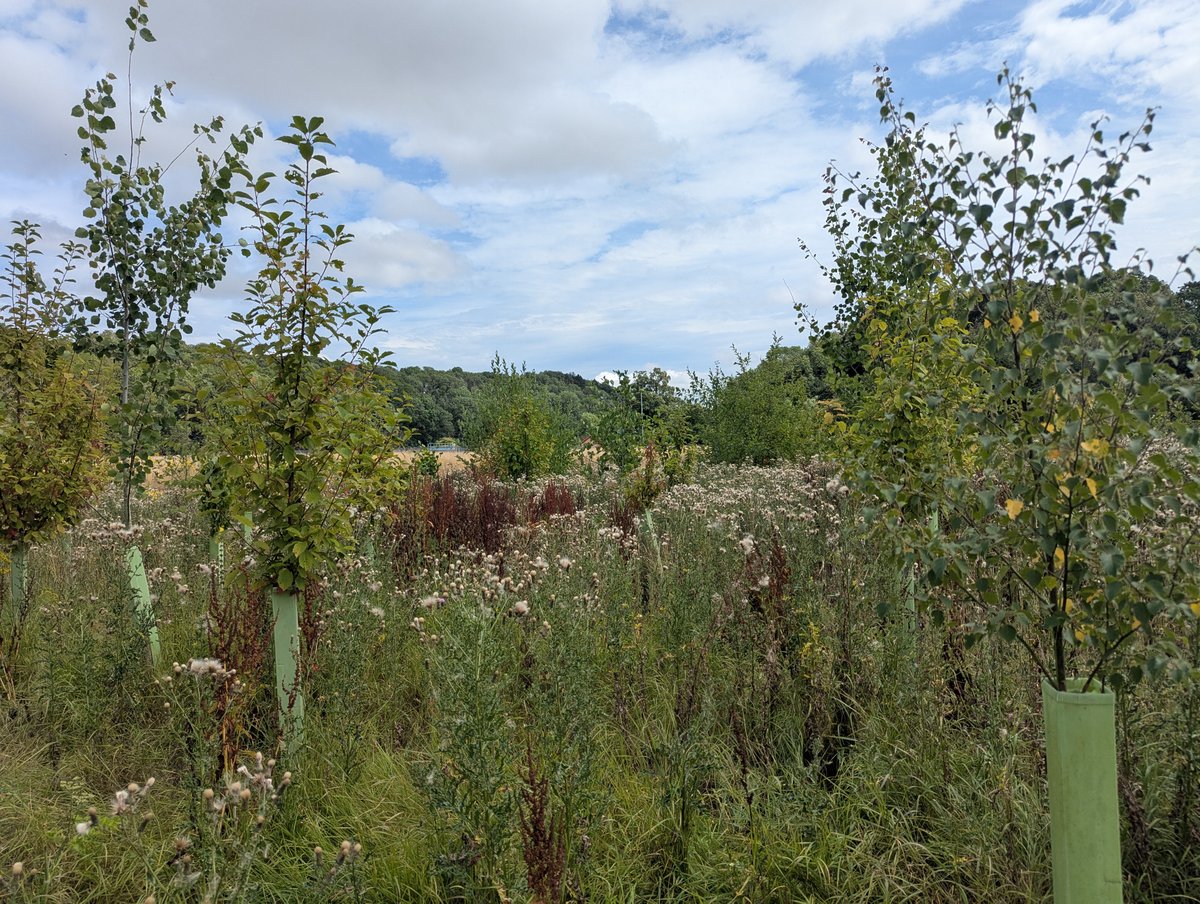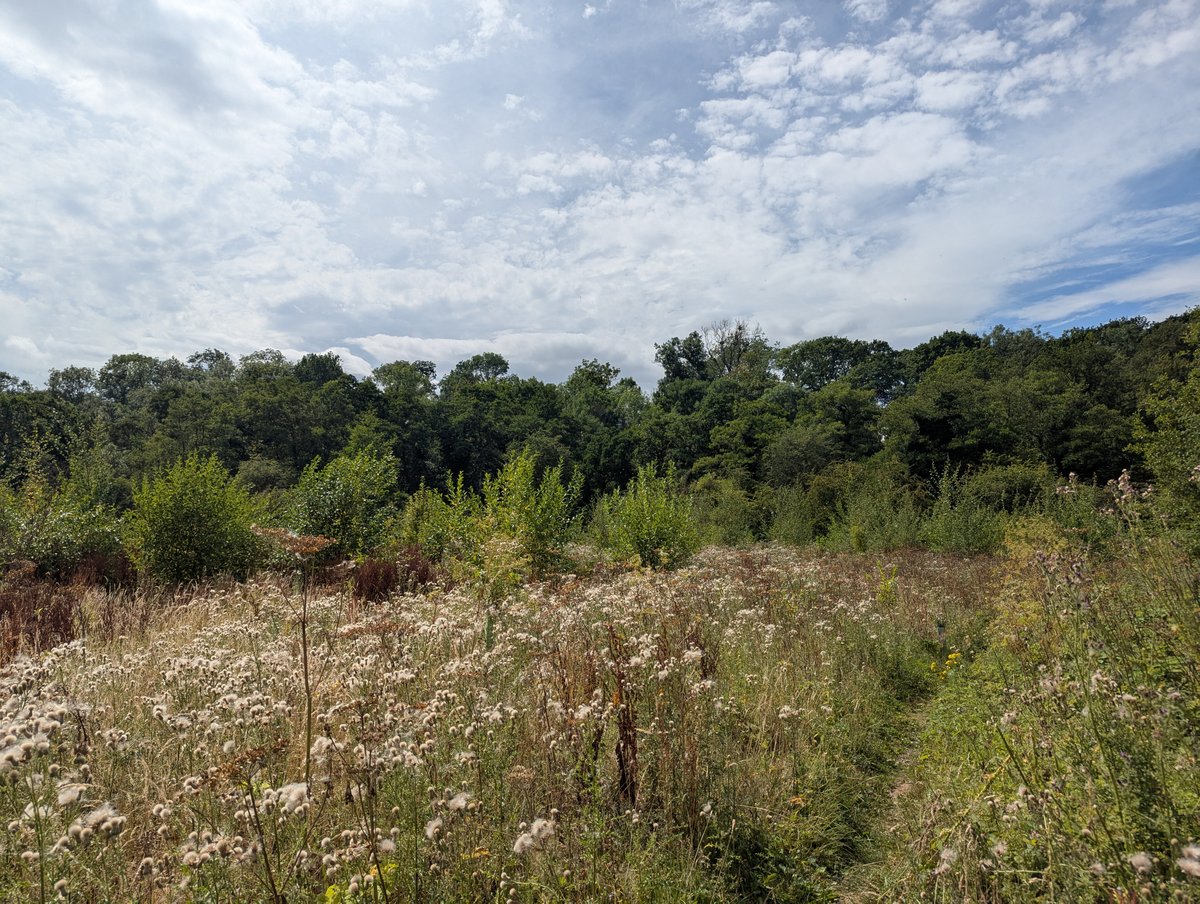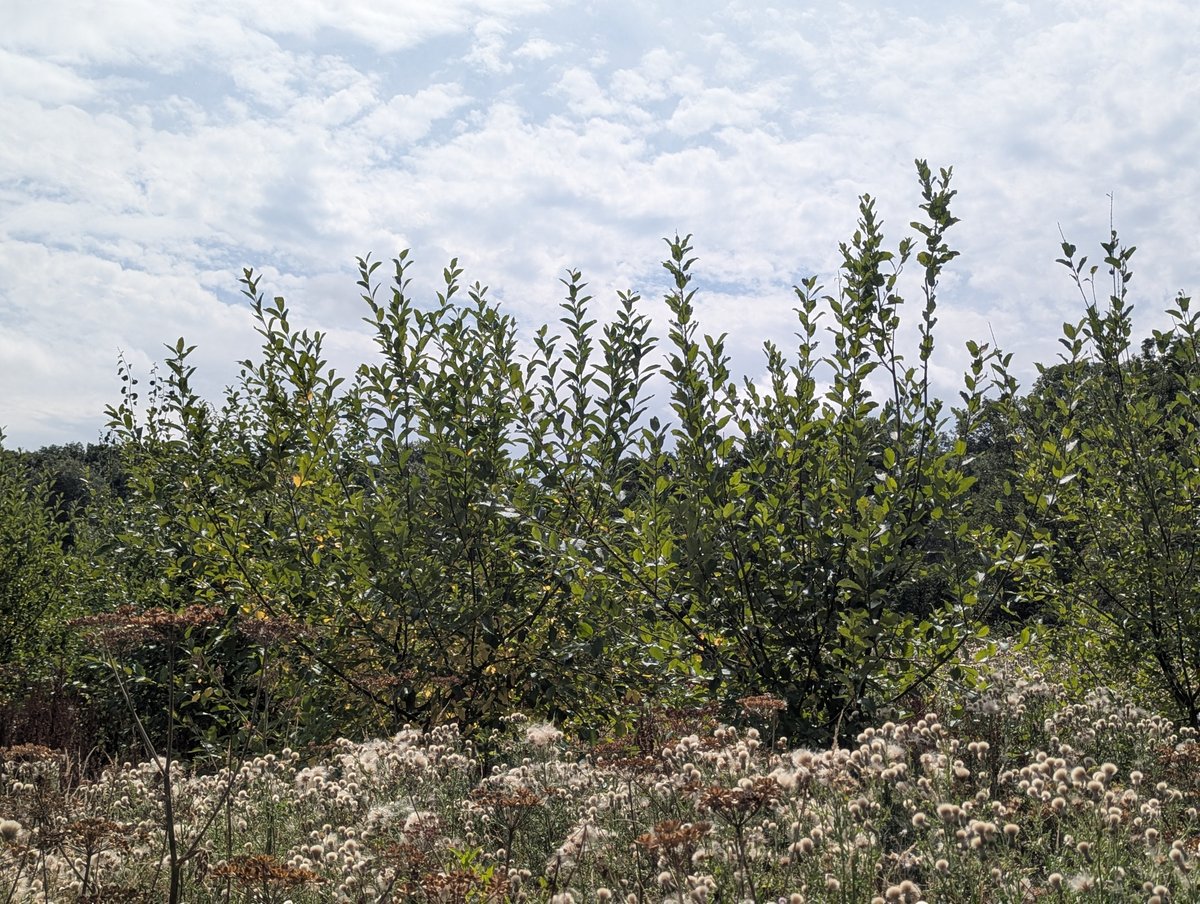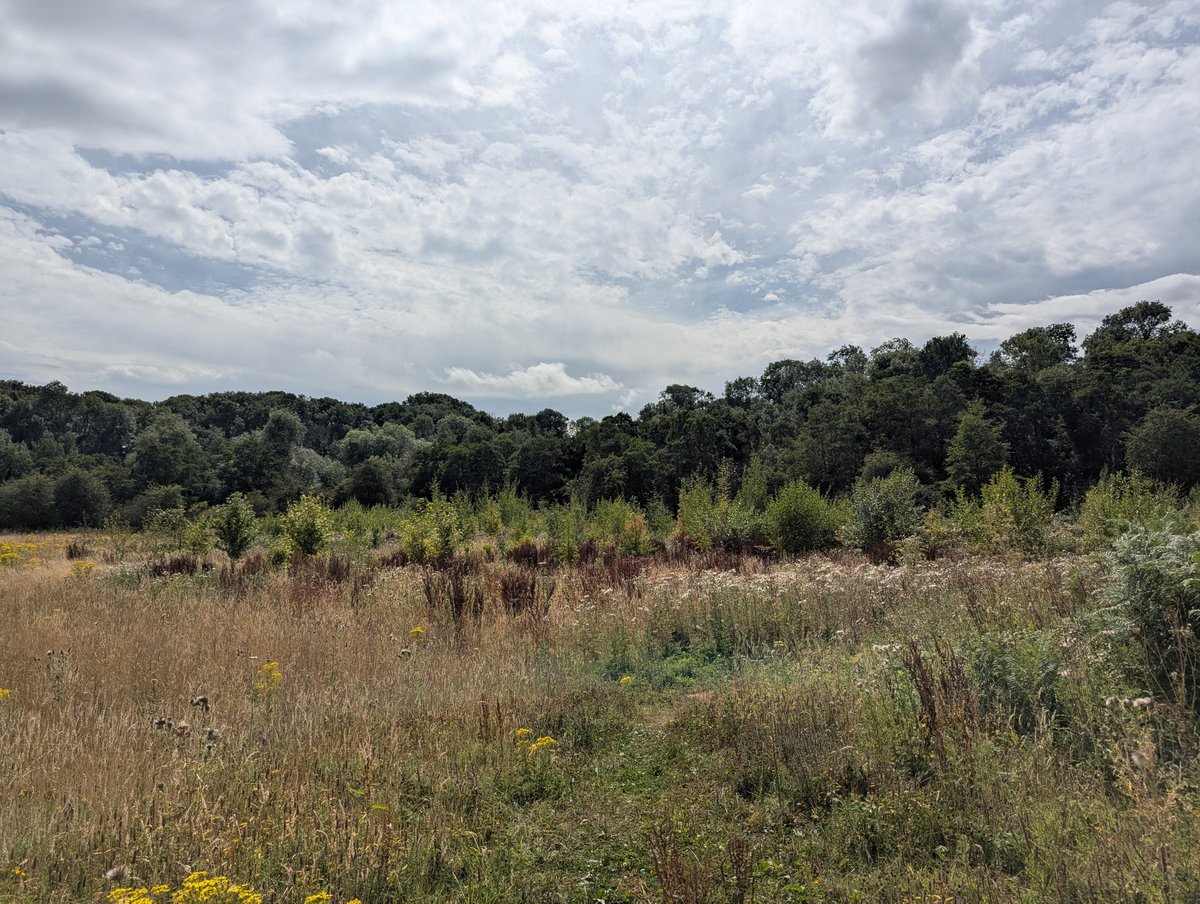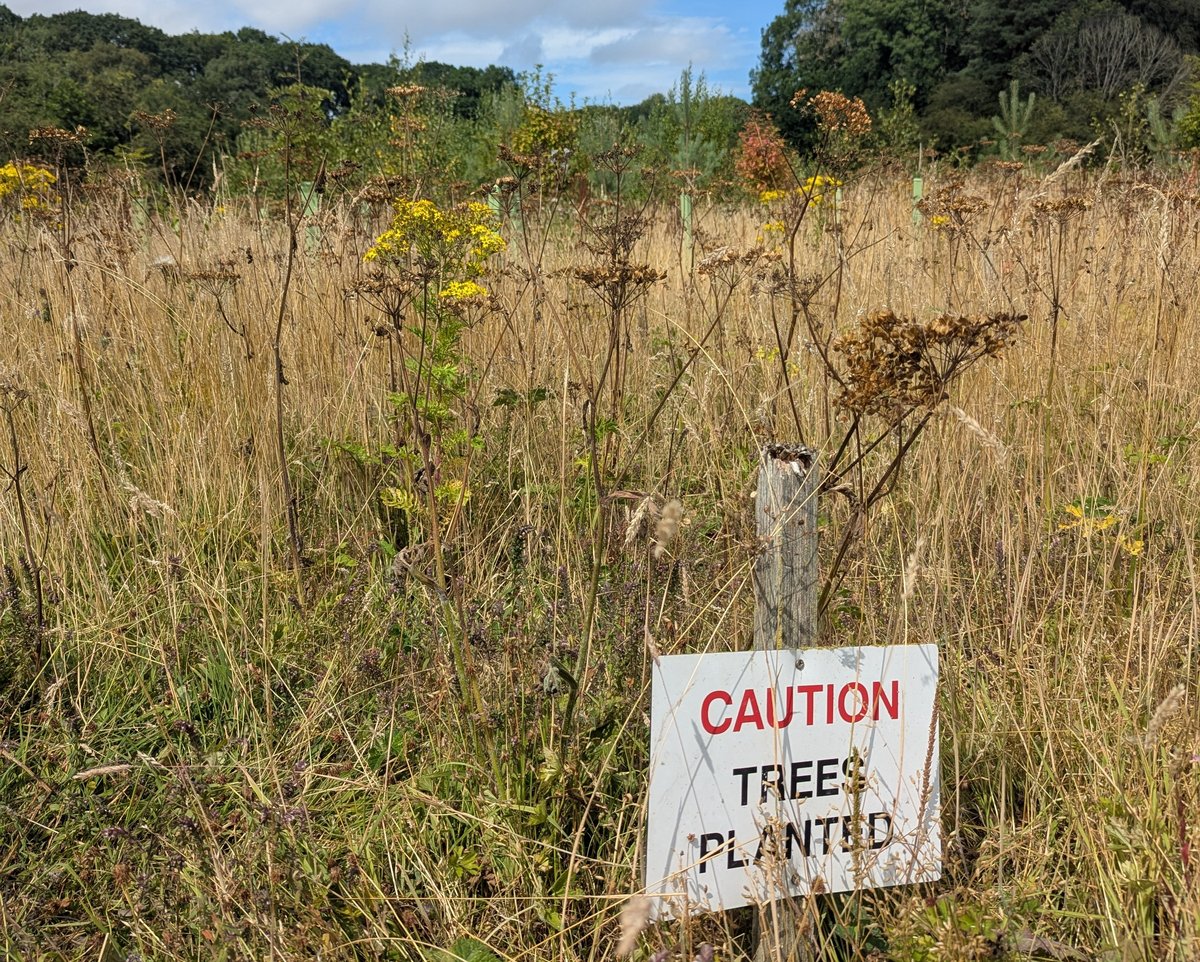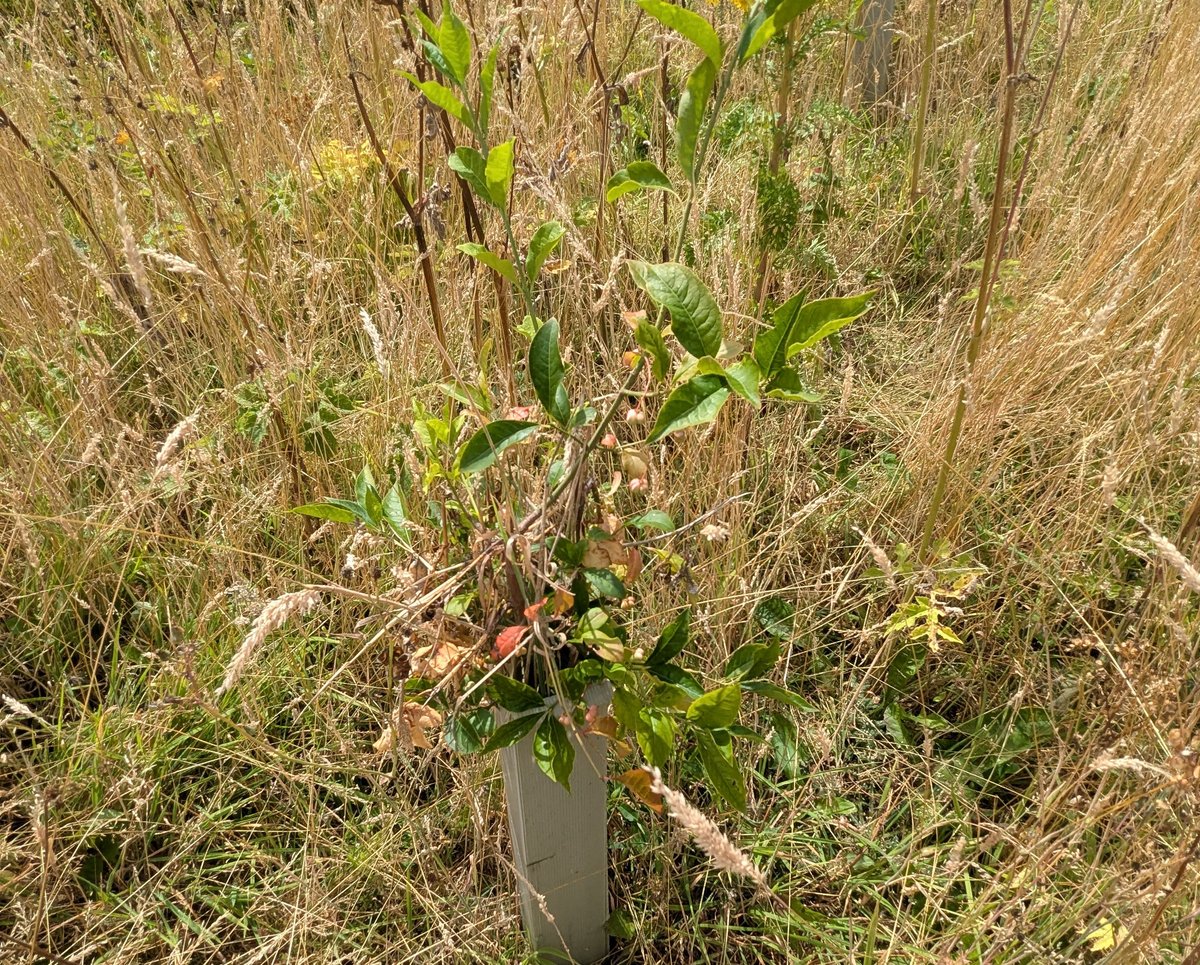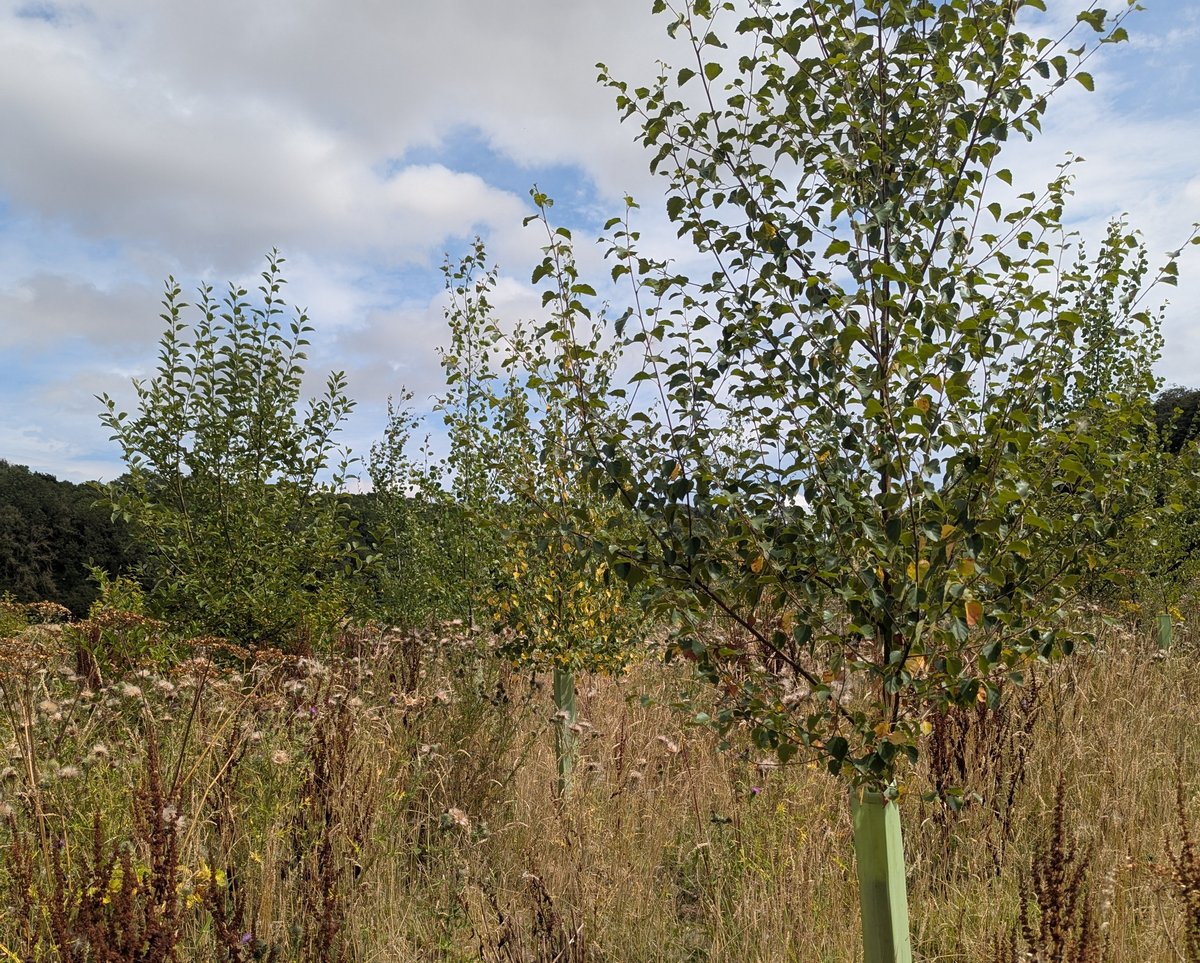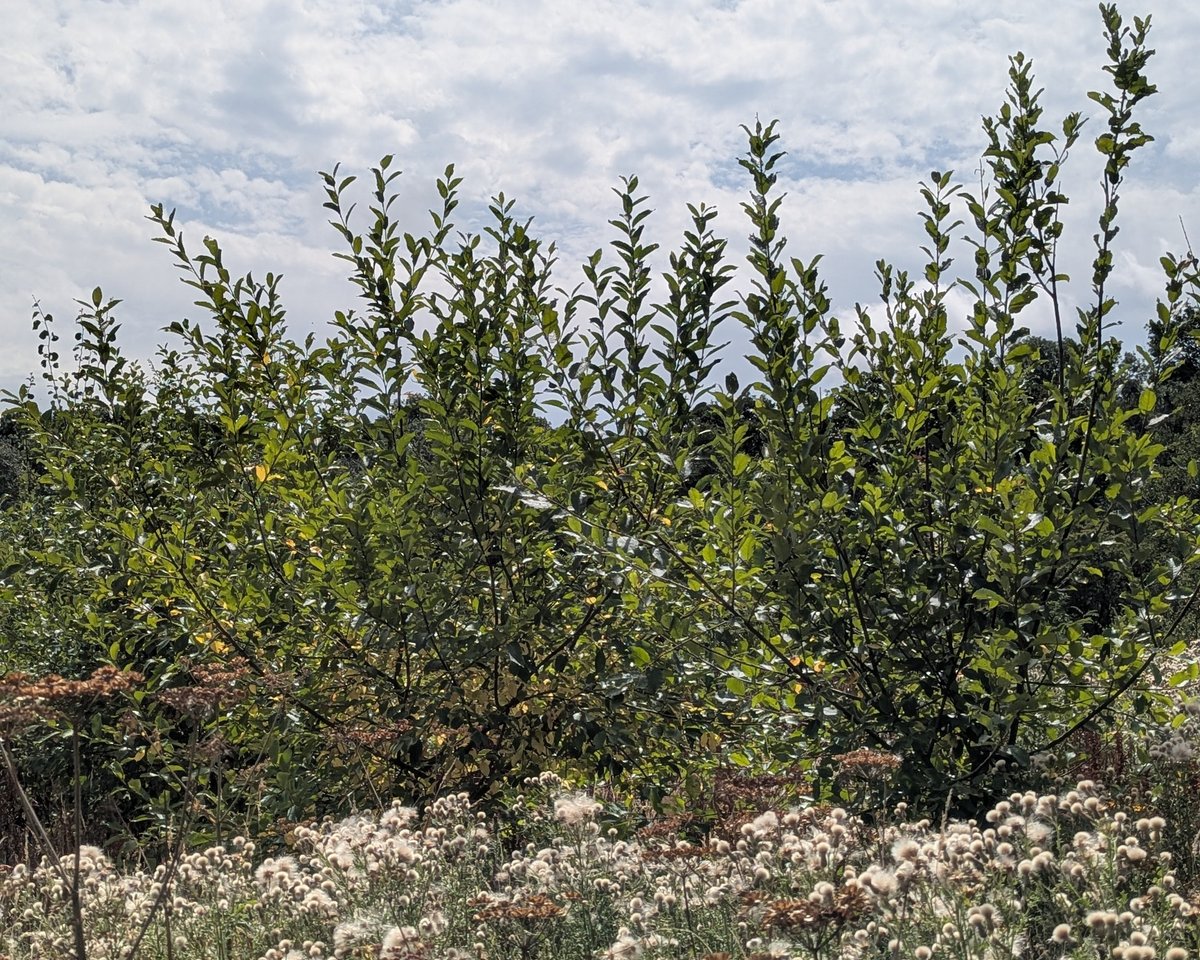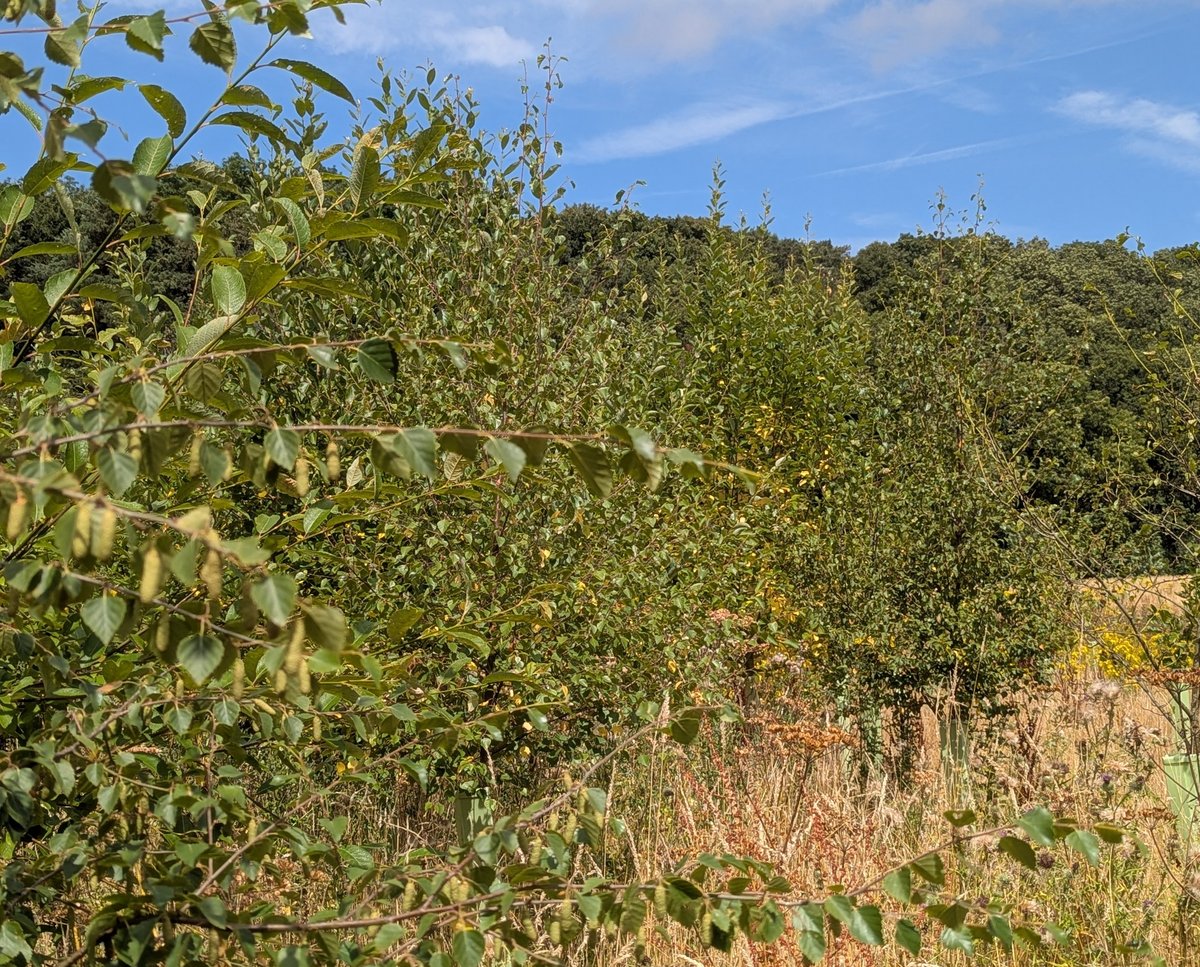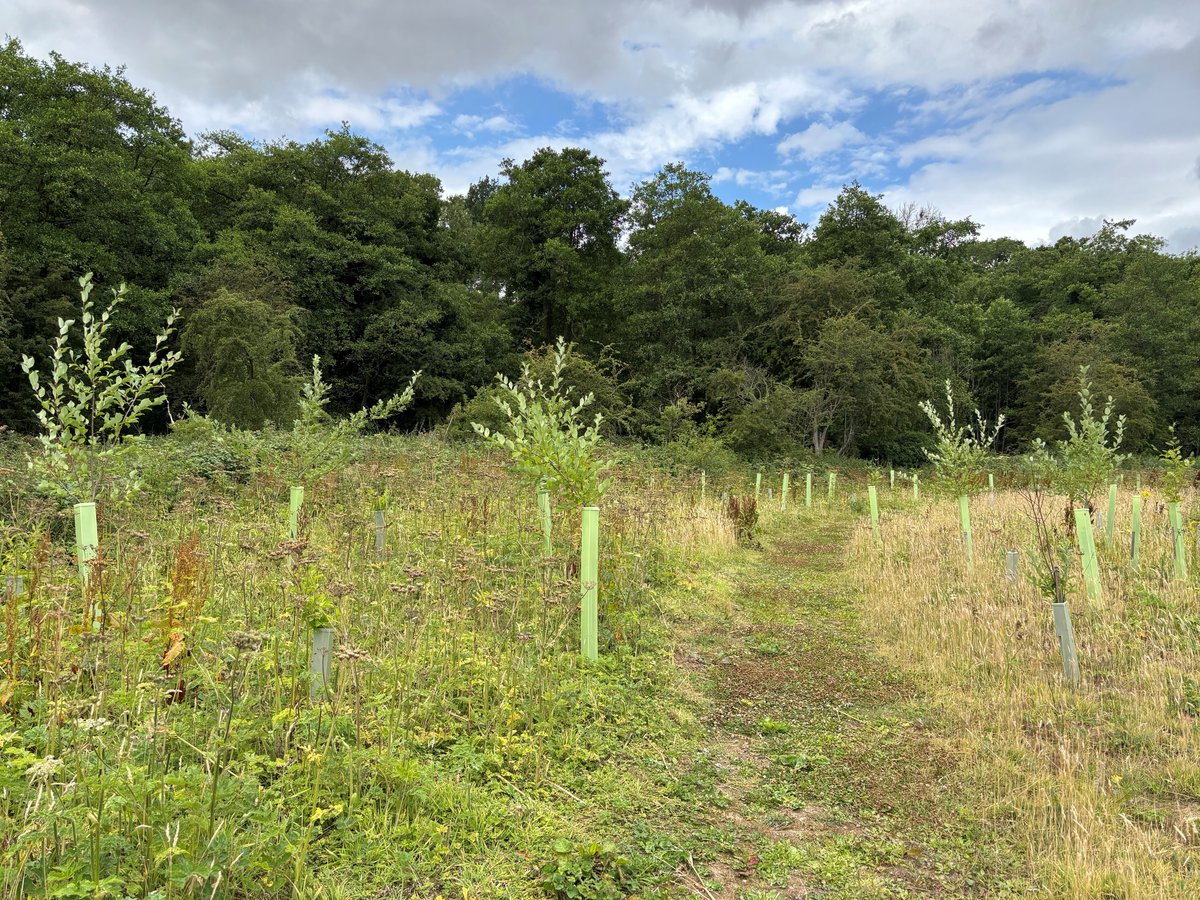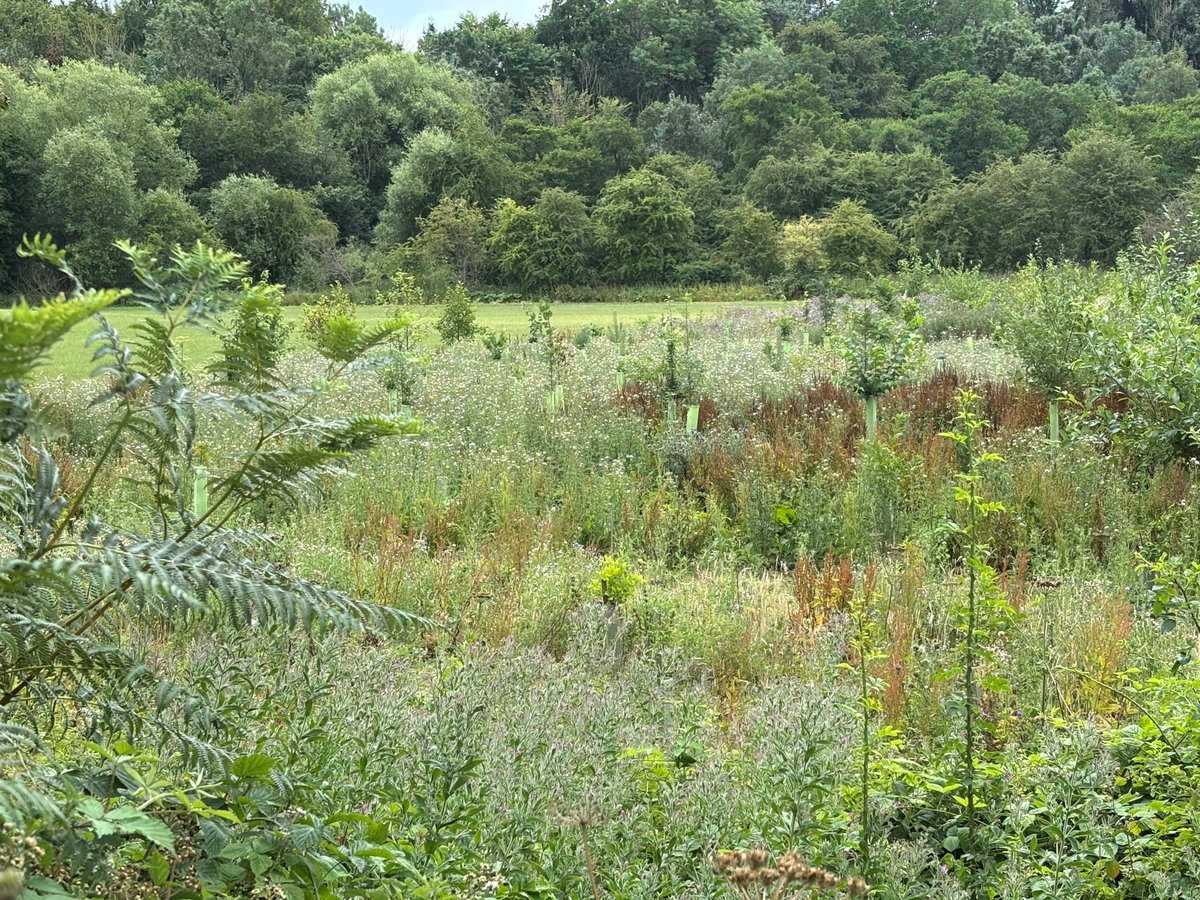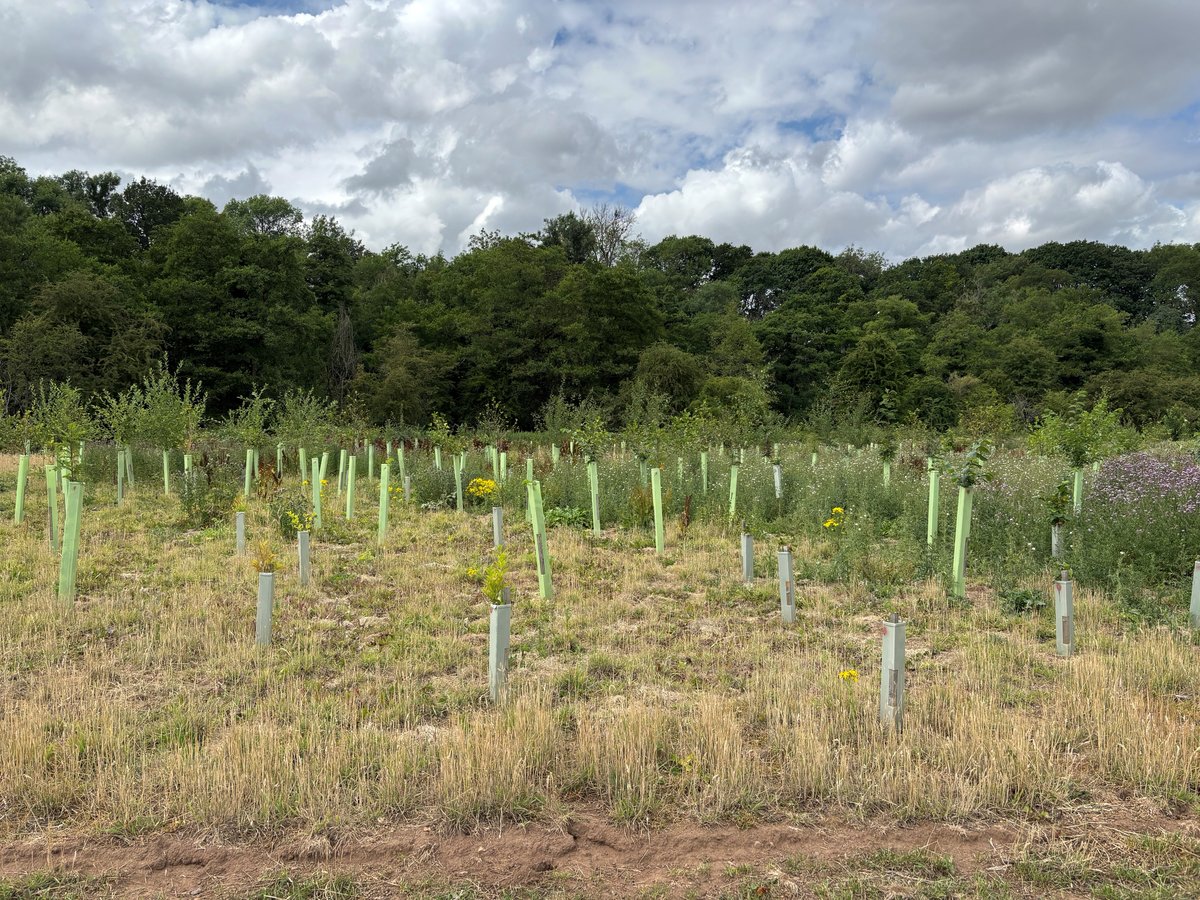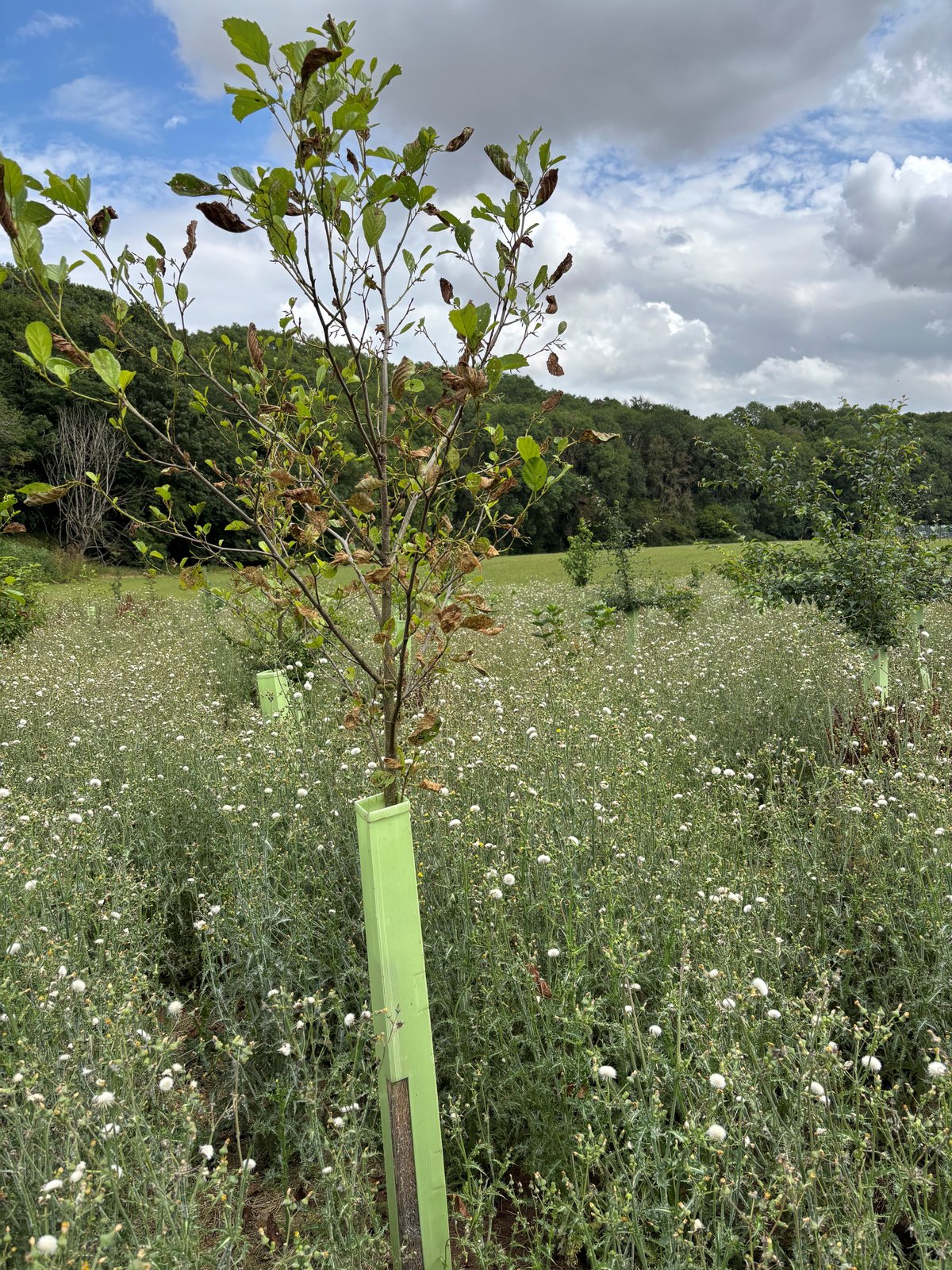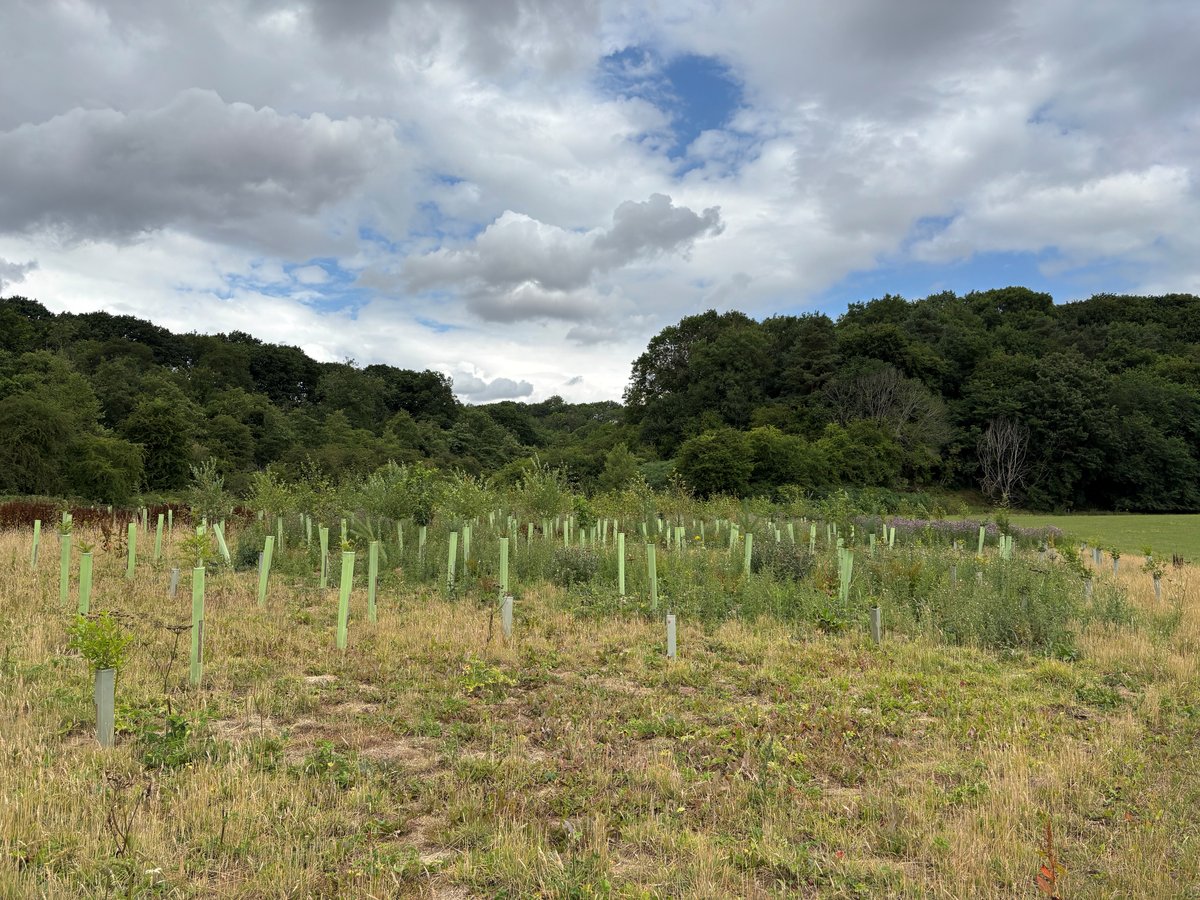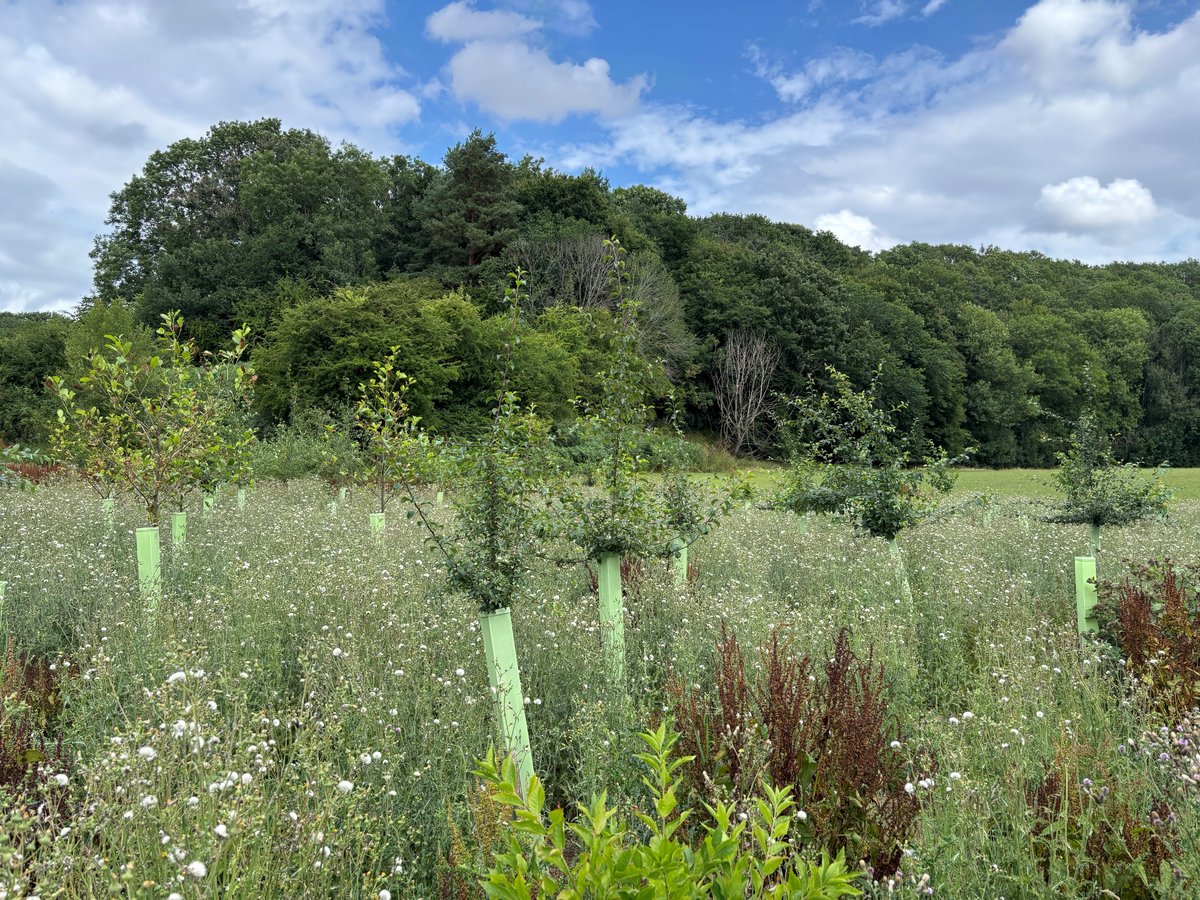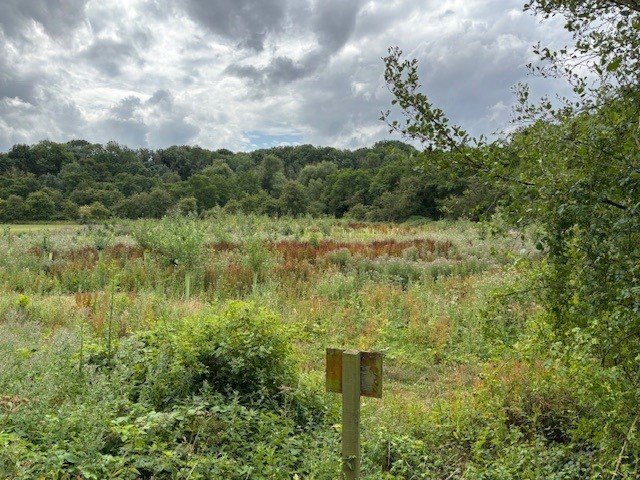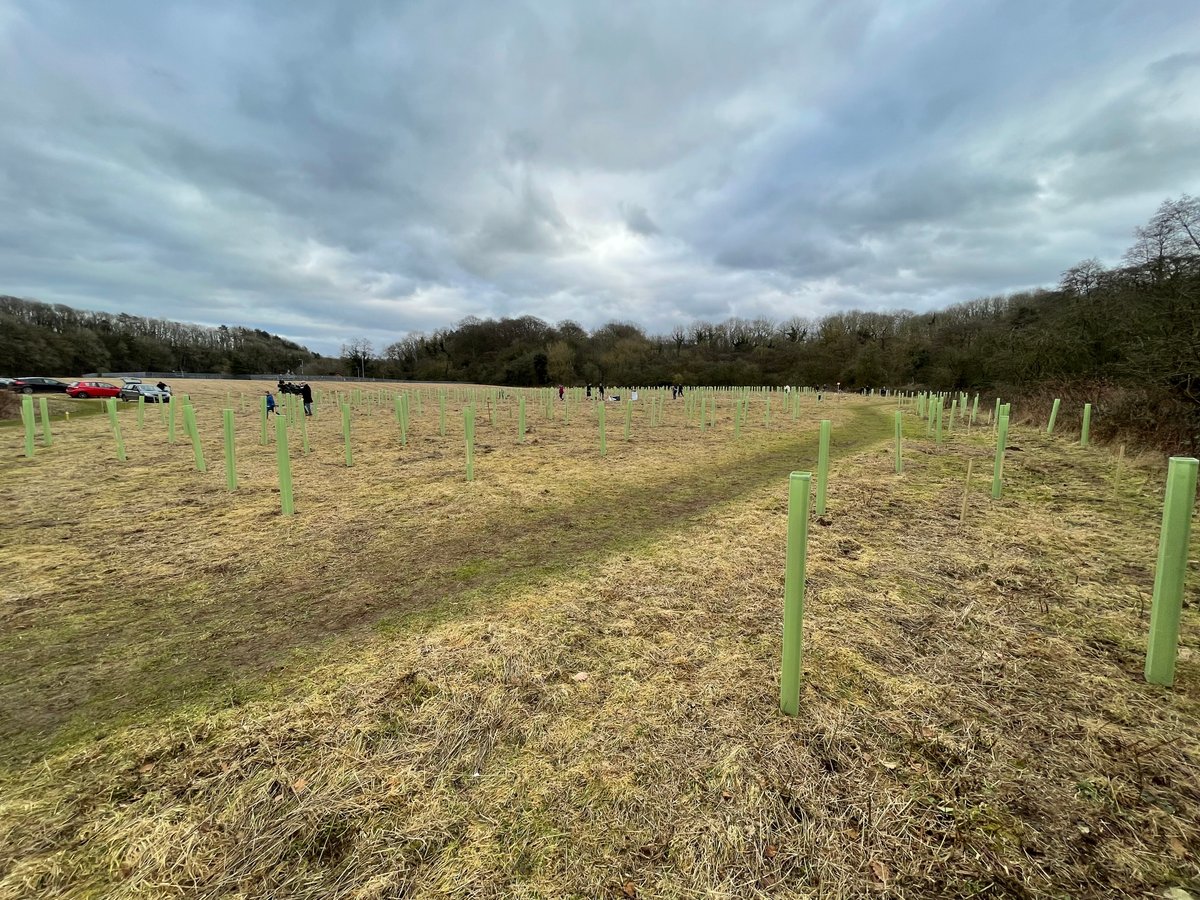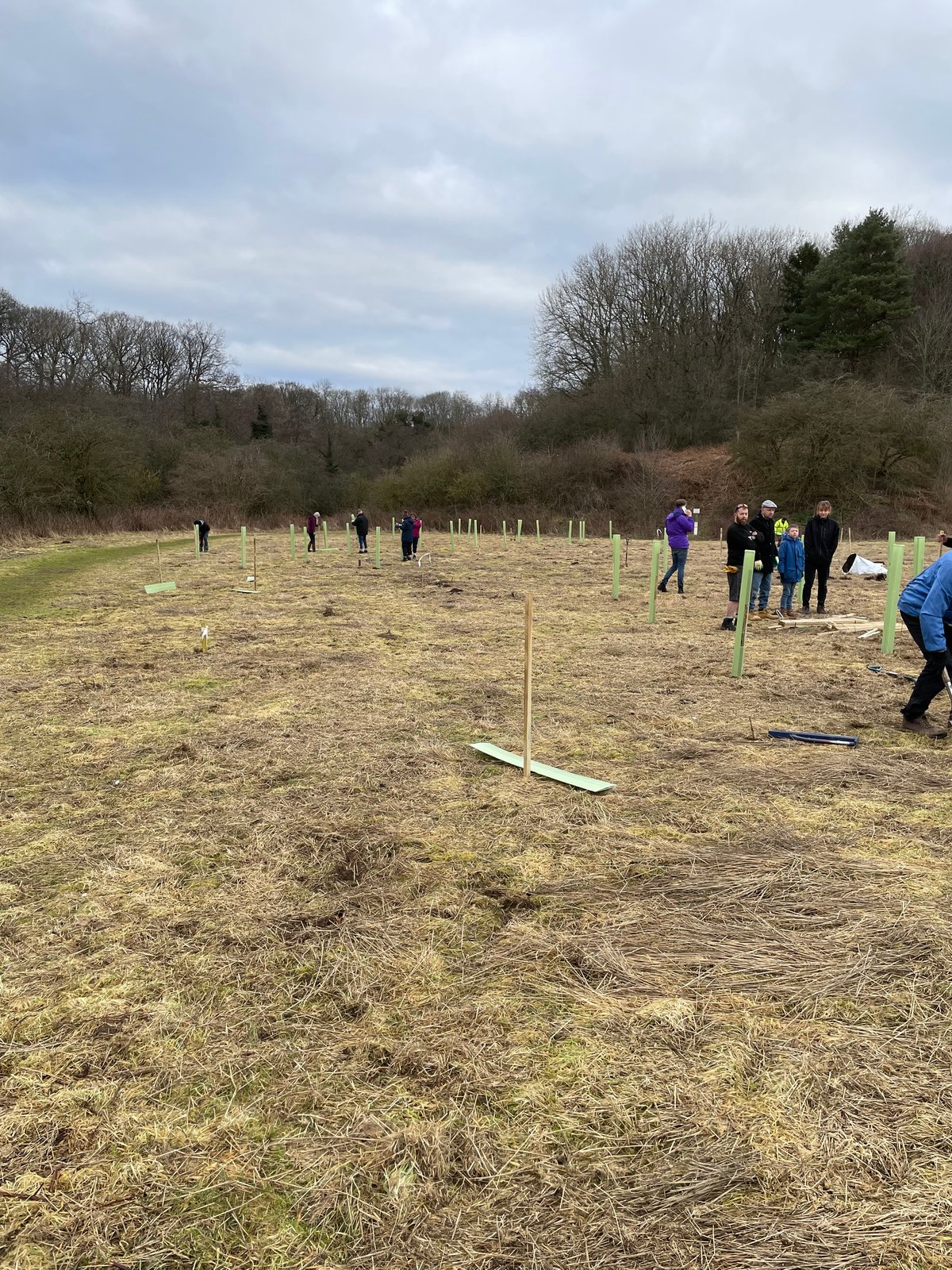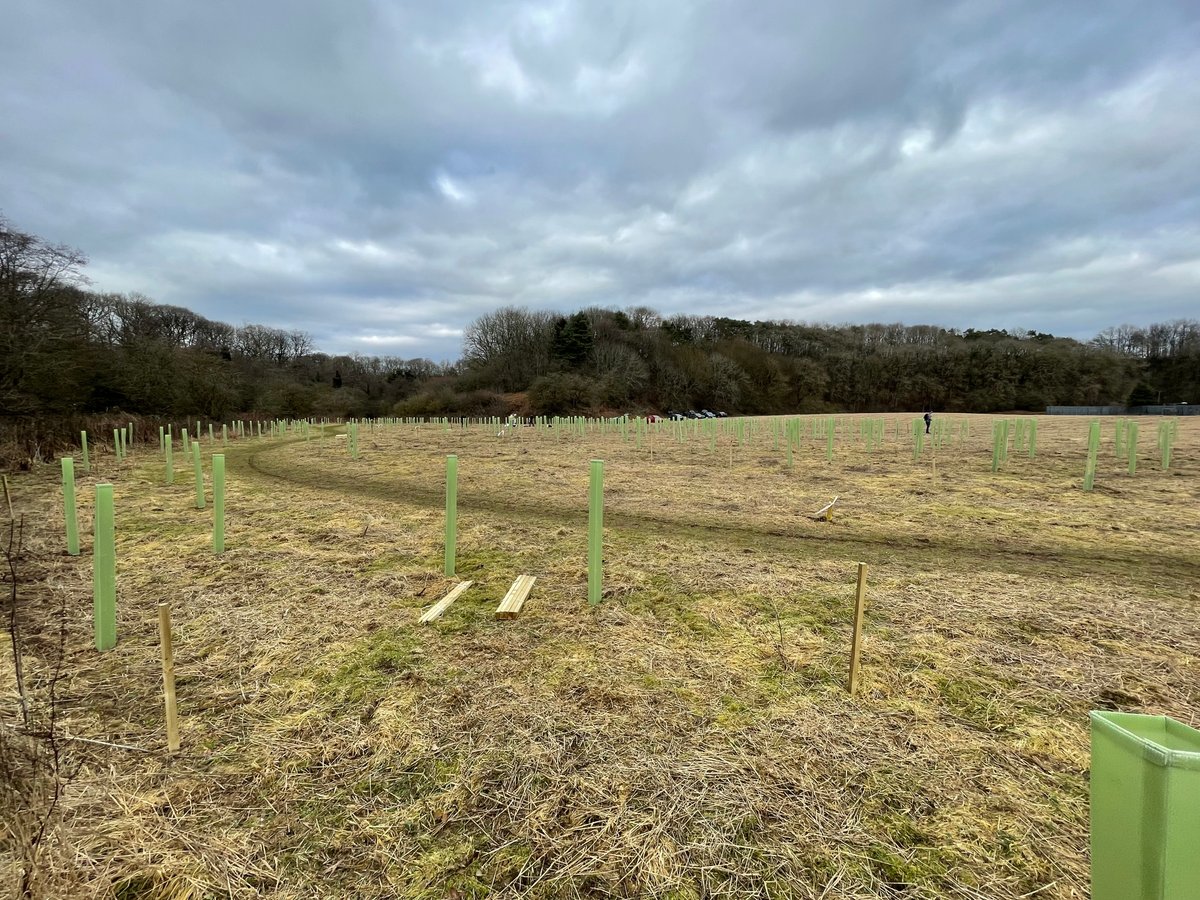


This site has suffered very mixed fortunes, with one area showing a 92% survival rate ranging through to an almost total loss in another area. Thistles made some areas inaccessible so we were unable to check the trees there.
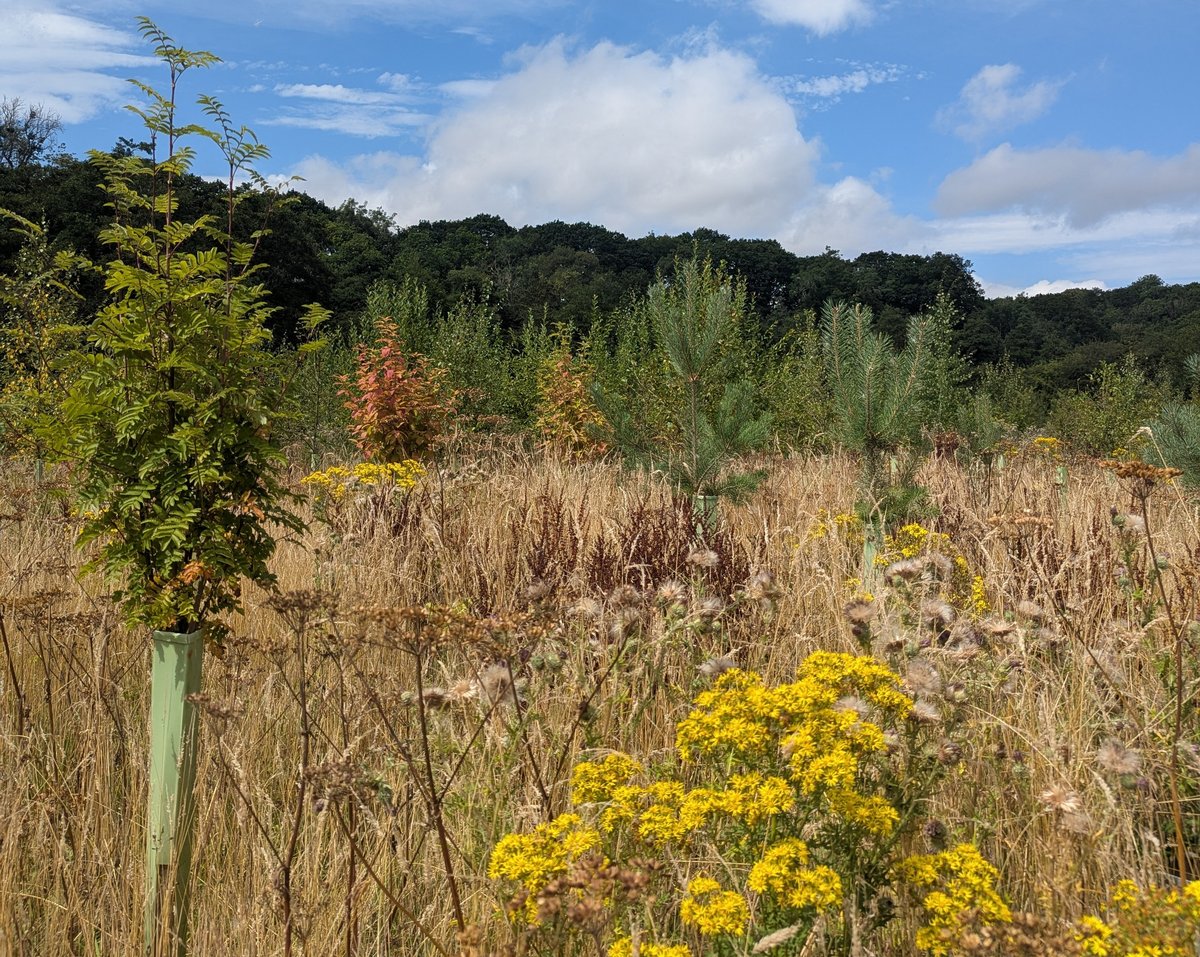
Where trees were established they were doing really well, with some of the silver birch more that 4 metres tall, and these had mostly outgrown their guards. Grass could be seen growing inside the guards and some of the surrounding grass and thistles were a good two metres in height.
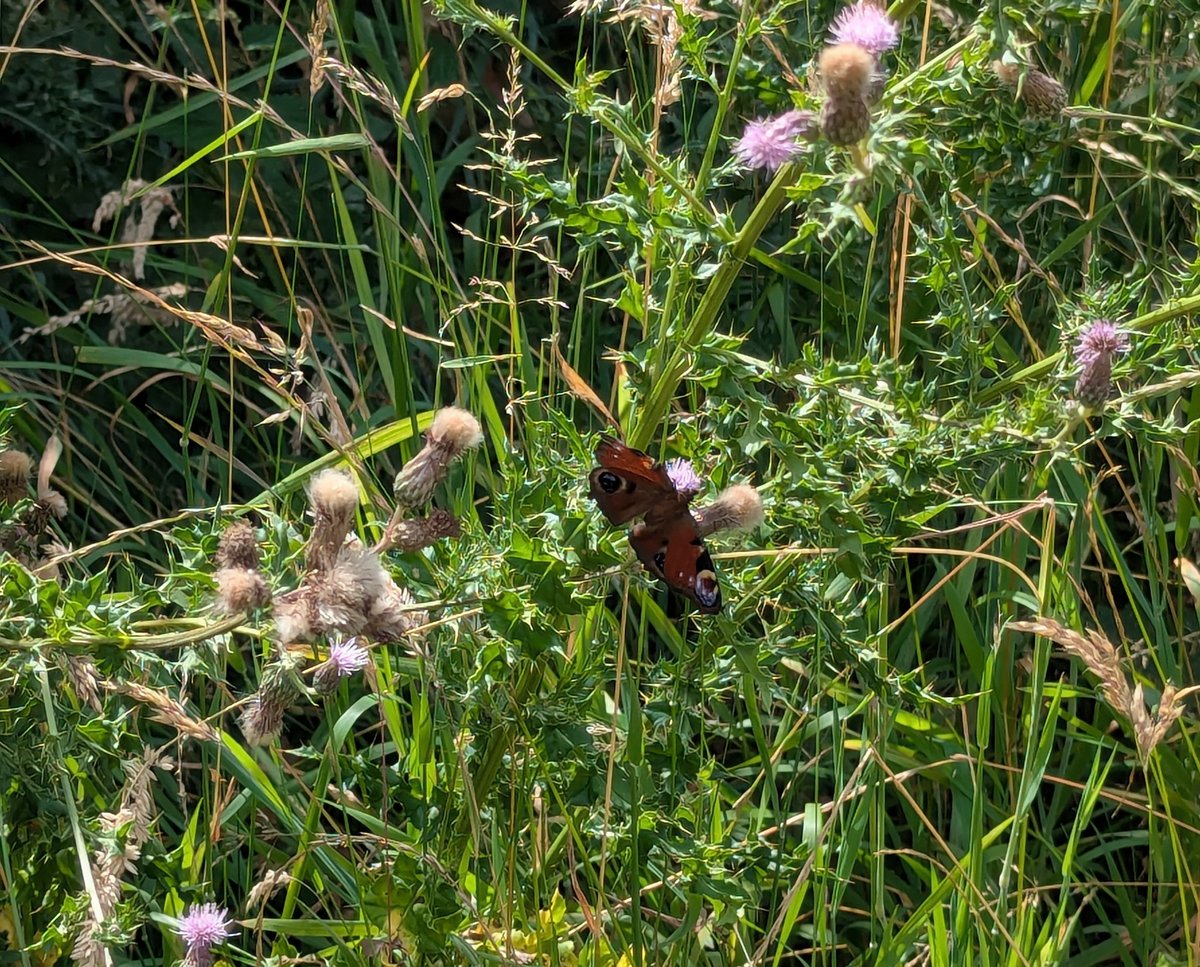
It was a pleasure to see healthy ranunculus in the nearby River Leven, thistledown dancing in the wind, and many butterflies in the ragwort between the trees, as well as hearing the sound of grasshoppers in the summer air.
We were less happy to notice invasive Himalayan balsam making its way along the river bank, but that river is infested and we cannot dedicate the resources to clearing that entire river whilst also trying to clear the entire Bristol Avon.
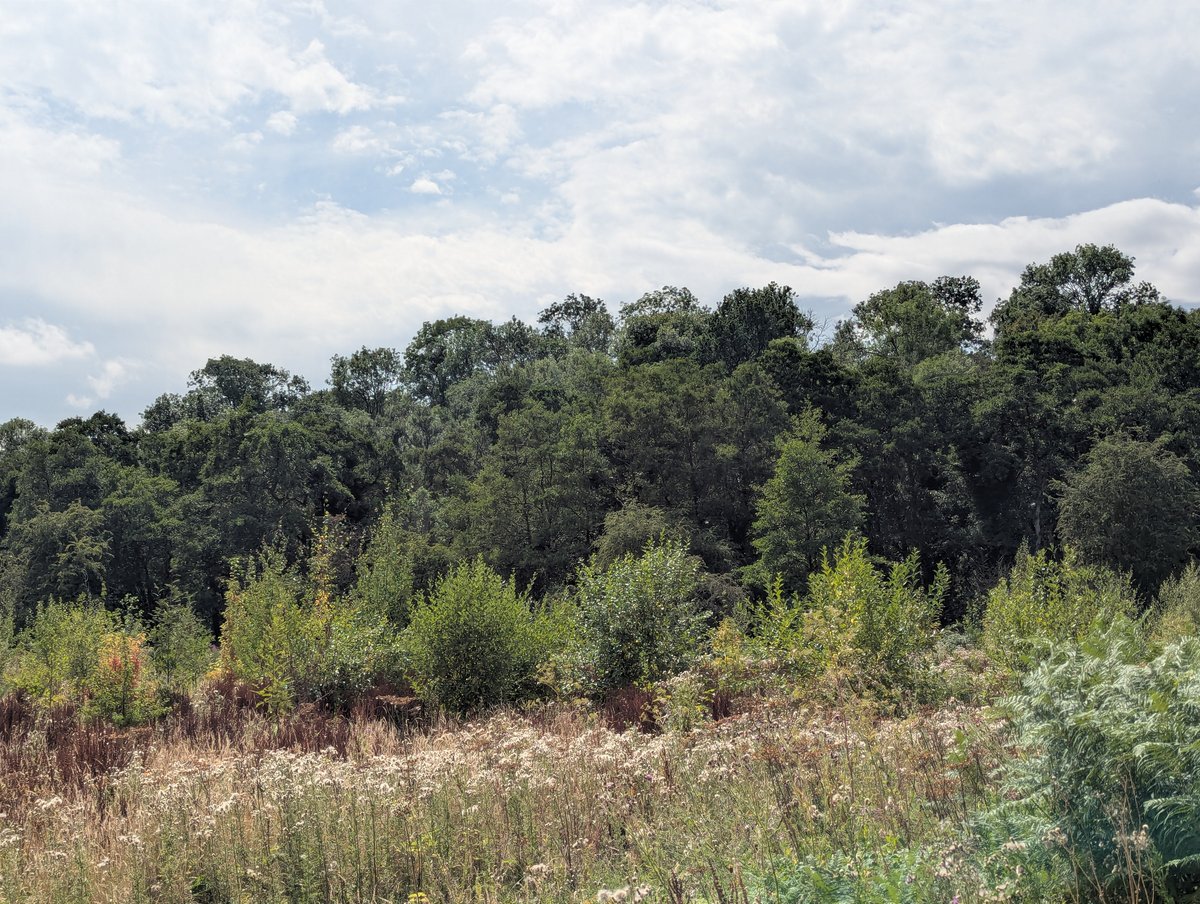
Whilst it was nice to see this newly established woodland with the backdrop of a mature woodland over the other side of the river, the missing patches of trees were quite obvious. We need to restock next year and devise a more effective maintenance plan. This site highlights the importance of managing grasses within a semi-rewilded field and woodland.