
Rewilding the Sea
Image: National Marine Sanctuaries, photo by Douglas Croft · Public domain

Rewilding is a term most associated with terrestrial landscapes. It conjures images of rewiggled rivers reaching out into floodplains, shimmering with returning spawning fish, or mosaic wood pasture with herds of free-roaming wild ponies, deer, cattle and boar, or beaver wetlands spreading deep pools that sparkle with a thousand chitinous insects hovering over otters slipping into the waters.
And yet some of the most truly wild places left on our planet are in the ocean, where giant predators still sweep through the water. Weird and wonderful creatures swim, scuttle or pulse through the salty seas and huge coral reefs, meadows of seagrass and forests of kelp are home to a whole host of other beings.
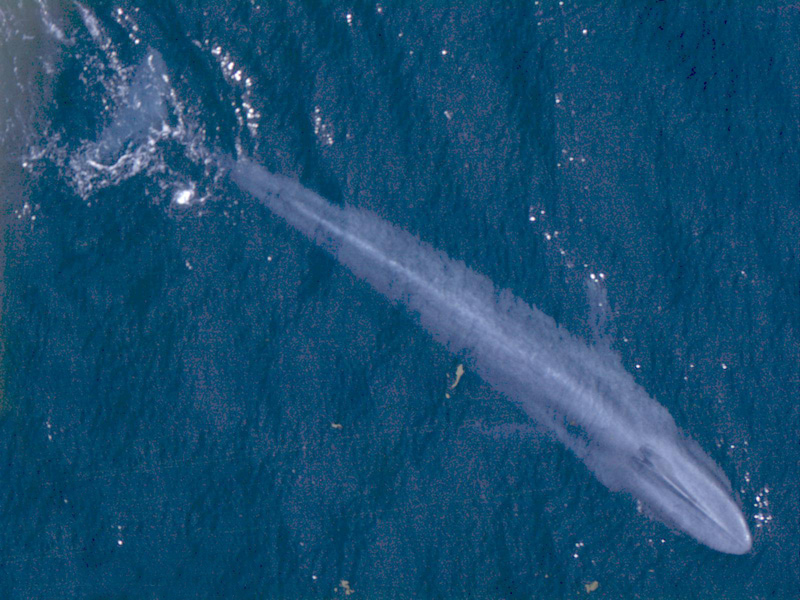
Rewilding the sea, or seawilding, has grown in popularity over the past few years as the treasures of the seas are brought more into the public awareness, with some ambitious and promising projects taking place on our home shores.
Why Rewild the Sea?
Just as shifting baseline has blinded us to the loss of biodiversity and bioabundance on land, so it has with the sea too, and here it is even worse. It is a world that is largely invisible to most people. You are unlikely to notice the loss of a seagrass meadow, or how there are not any sharks in your local area anymore, as you might notice the loss of a wildflower meadow or hedgehogs.
The UN has estimated that 90% of fish species are either fully exploited, overexploited or depleted. Climate change is leading to warming seas, driving huge coral bleaching events, and enabling the spread of species into regions where native populations are already struggling. Pollution from industry, sewage and farming makes its way through rivers and into the oceans. There is an estimated range of 82 to 358 trillion particles of plastic in the ocean, with an extra truckload of rubbish added every 60 seconds. The carbon emissions from trawling were estimated in 2021 as equivalent to the global aviation industry. These destructive fleets are subsidised by $20 to $30 billion globally, creating a fleet double the size our oceans can sustain.
We are attacking our ocean from every angle. If ecosystems were intact, they might be able to show more resilience in the face of climate change. If the climate were not warming, species might have a better chance at reproducing and surviving. If we did not scrape every living thing out of the ocean, we might have more life than plastic. The sea gives us everything we so desperately need: oxygen, carbon sequestration, climate resilience, as well as cultural richness and community belonging for many people around the world.
Aside from the ecological damage, the seas are rising in response to climate change, with previously once-in-a-lifetime storms coming every few years, threatening towns, cities, counties, and entire islands.
The State of UK Waters
Our Marine Protected Areas currently prevent bottom trawling in only 11.4% of our waters, despite 27.97% being protected. Our seagrass meadows and kelp forests have almost disappeared. The seas are warming, and we are seeing jellyfish normally seen off the coast of America. This is pushing cool-water-loving species northward, disrupting food webs that affect more than just those heading north. Pollution and plastic continue to reach into the remotest parts of the ocean, and close to our shores the density of human activity produces high concentrations.
While intense conservation and restoration efforts have seen some successes, wild seas are still quite a long way off. Commercial activity, extraction, habitat damage from trawling and collision, pollution, and even noise all contribute to an environment that would be like living in the most industrial and polluted city imaginable. All this disturbance is releasing even more carbon. In 2024, it was found that 244 million tonnes of carbon is stored in just the top 10cm of sediment in British waters, all released as they are disturbed by human activity.
No Take Zones
One of the most effective and revolutionary things we can do is something Sir David Attenborough has strongly called for: No Take Zones. These are areas protected from extractive fishing, bottom trawling and dredging, some of the most destructive activity in the water. No Take Zones are like the cores in the three Cs of rewilding: cores, corridors and carnivores. These core areas are refuges for species and habitats, meaning there are safe places to spawn, grow, hunt and live. They can act as nurseries for species that are depleted outside the protected area, meaning No Take Zones can actually increase catches for both small-scale and large-scale fishers.
Without ecosystem damage, smothering of marine life, noise pollution and bycatch of fish, sharks, dolphins, whales and seabirds, these areas have the potential to refill our oceans with life and hope.
The community on the Isle of Arran decided to set up a No Take Zone, which went into place 18 years ago after 13 years of campaigning. The Lamlash Bay No Take Zone prohibits any fish or shellfish being taken from its waters, seabed or shore. It is home to maerl beds, a coralline pink seaweed that creates a diverse habitat for many small marine species, as well as seagrass meadows and kelp forests. The years of campaigning are paying off. Biodiversity has been shown to be increasing by 50% compared to outside the zone, and the size, fertility and abundance of species like lobsters and scallops is significantly higher.
While improvements have been made on protected areas, the UK government will not even commit to banning bottom trawling, despite pledging to extend the ban from 18,000km2 to 48,000km2 in summer 2025. We should be extending full No Take Zones, not reneging on pledges just to stop bottom trawling. But perhaps this is where communities can take the lead where government will not.
Kelp Forests
Under the waves, another forest grows. While Protect Earth is usually focused on creating forests of trees, our kelp forests are just as precious, and in even worse condition than their kin on land.
Kelp forests are found across more than 25% of the world’s coastlines, making them an internationally important habitat that connects us. They anchor as deep as 45m down, and grow fronds up to 30m high. Their stalks are habitats for worms and crustaceans, and give shelter and food to a multitude of species. They are also important nursery grounds for species that matter in the food web for larger predators such as seals and sharks.
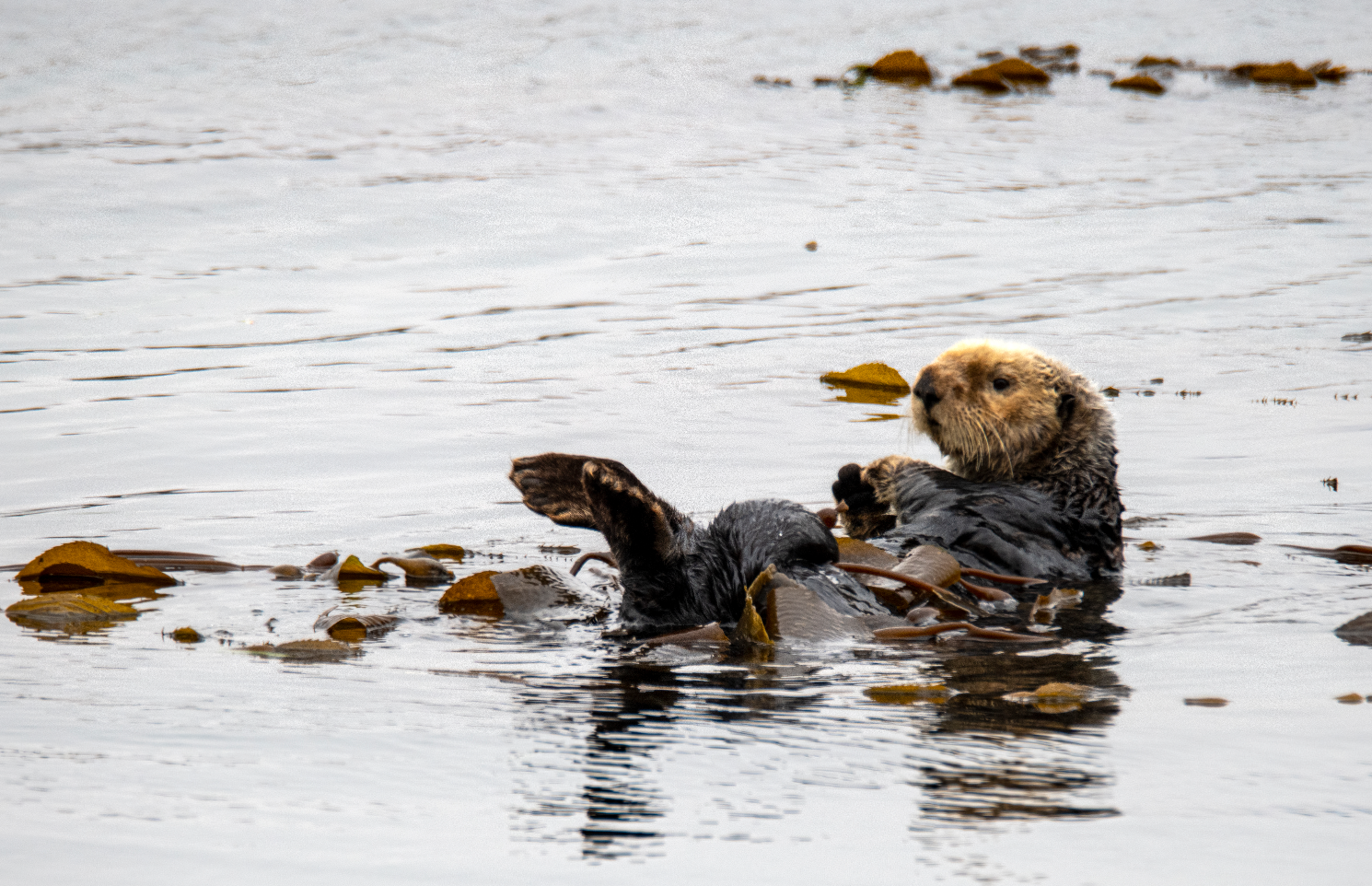
We have seven different types of kelp in the UK, all with their own contribution to our seas. This range of species creates different microhabitats, increasing biodiversity. Kelp forests have been described as repositories of biodiversity and as critical providers of ecosystem services through carbon capture and fisheries habitat.
Kelp faces the same threats as many other marine habitats and species: extraction, bottom trawling, pollution and rising sea temperatures. The Sussex Kelp Restoration Project is helping to combat these threats, after kelp forest dropped to just 4% of its 1980s extent. Backed by Sir David Attenborough, the Help Our Kelp campaign gathered enough public support to secure a ban on trawling in 304km2 of the Sussex coast in 2021. Kelp has begun regenerating, and species are tentatively returning. When fully grown, the kelp will help protect the coast from increasing climate-related storm activity, lock in carbon, and bring the featureless desert that the seabed had become back to life.
Seagrass Meadows
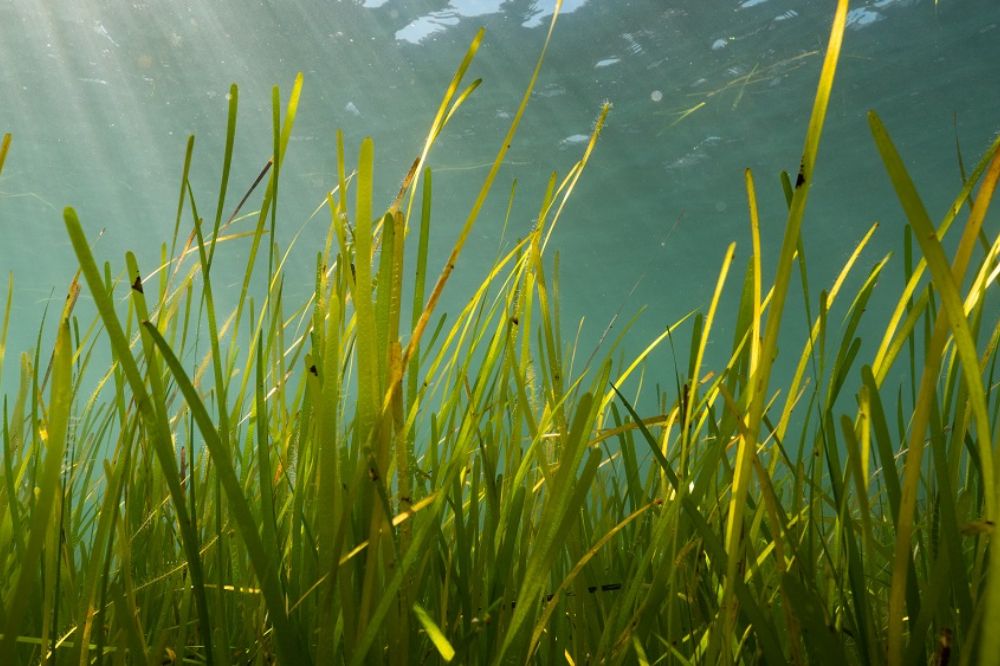
Seagrass meadows are the only flowering plants that live in the sea, and they capture carbon up to 35 times faster than tropical rainforests. Much like kelp forests, they provide nursery habitat for many fish, crustaceans and molluscs, which then feed into the food web for other marine species and for humans. Seagrass also stabilises sediment with its rhizome-based root system, improves water quality and helps stop coastal erosion. It even supports many bird species as part of their diet.
We have lost around 92% of our seagrass meadows due to bottom trawling, anchor damage, coastal development and pollution. Historical seagrass meadows could have stored 11.5 Mt of carbon and supported approximately 400 million fish, a far cry from where we are today.
In North Wales, a collaboration between WWF, the Wildlife Trust, Swansea University, Pen Llŷn a’r Sarnau SAC and the local community has been helping restore seagrass meadows. Seeds are collected from a healthy meadow in Porthdinllaen, processed, and then planted using a variety of methods. In spring 2023 alone, the project planted 200,000 seagrass seeds across Pen Llŷn. Seagrass has already started to grow at both sites and the ambition was to plant 5 million seagrass seeds across North Wales by the end of the project.
Oyster Reefs
Oyster reefs have largely disappeared from our isles, and with them the North Sea has turned murkier and our shores less protected. They are a keystone species. Straddling the line between habitat and animal, they create varied ecosystems for others, just like kelp and seagrass, while also providing substantial water filtration. It is hard to imagine a sparkling, clear blue North Sea, yet at one time that is exactly what it would have been thanks to oysters.
At around 140 litres of water filtered per oyster per day, losing oyster reefs has removed a species that could help mitigate some of the worst effects of pollution entering our oceans. They also sequester carbon, one more reason to put these molluscs back where they belong.
That is exactly what the Solent Oyster Restoration Project has been doing. Established 12 years ago after a 95% decline in native oysters, the project has restored more than 154,000 oysters into nurseries and reefs, released over 1 billion larvae in a single year, and observed more than 130 marine species, including critically endangered eels and seahorses.
Aside from this, more than 15 million juvenile oysters are due to be released into the North Sea around Orkney. Perhaps we will see a sparkling North Sea again in our lifetimes.
A Wilder Sea Is Still Possible
It can be difficult to connect with what is going on in the sea. We notice if there are not as many birds, or if insect numbers are so low that our windscreens stay clean. Out in the wilds of the ocean, there are not many people walking around seeing the destruction we have caused. But some have been out there, and they are speaking up and making a difference. Our oceans deserve to be as wild and abundant as our land does, and could hold the key to capturing carbon quickly, protecting our shores from climate change-induced extreme weather, cleaning up pollution, and providing sustainable livelihoods for coastal communities, if we let them.
There is a world where, from the shore, we can see miles-long shoals of fish, dolphins, whales and seals, where swimming out takes us over marinescapes equivalent to the African savannah, with seagrass meadows thrumming with life and sharks and rays swimming past. Diving down could take us into deep forests of kelp, encountering octopuses and crabs. That is a world within humanity’s ability to realise.
Support seawilding projects near or far, and speak up, even for what you cannot see, for what is gone, and for what could be again.